
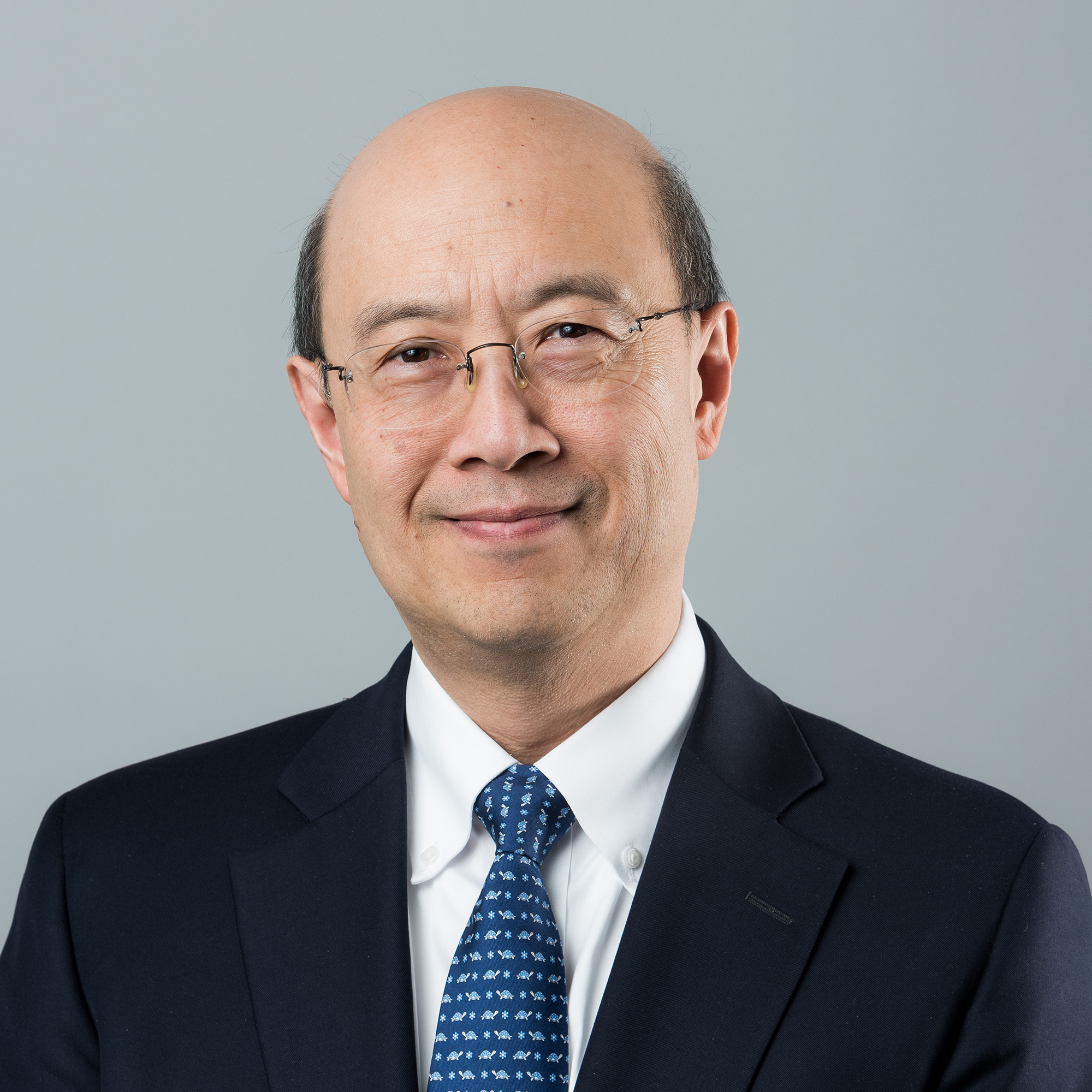
Andrew Lo
ILLUSTRATION: ISTOCK
Q: How are fellows part of your day-to-day work?
A: I consider students to be one of the key inputs to my research productivity. MIT has a great preponderance of extraordinary graduate students—a very “fat right tail” in our statistical distribution of quality, to use a term of art.
Many of my papers are coauthored with my students, and it’s not out of charity. It accurately reflects their contributions to the research program. They are, in every respect, coauthors and colleagues. A typical productive economist publishes maybe two, three, four papers a year. Last year, my coauthors and I published 15-plus articles. That’s not a brag, because it’s not just me doing this—I have an entire team of collaborators who love what they’re doing, and I love working with them.
The most useful thing for students is collaborating on research and spending time working on papers. They learn very early on how to do research. Most importantly, they learn how to feed their curiosity. Based on my experience in advising MIT students over the past 38 years, this kind of experience seems to have the biggest impact in developing a young scholar.
Q: What about the way MIT is structured helps develop students into scholars?
A: MIT has departmental boundaries, but they’re extremely porous. That’s partly due to our culture, which is, first and foremost, an engineering culture, a culture of solving problems as opposed to just publishing papers or staying within a specific discipline.
There’s an incredible breadth of curiosity here. Faculty are willing to talk about pretty much anything anywhere—at a lunch table, at a conference, evenings and weekends, etc. People want to see how ideas get put into practice.
The second way this curiosity manifests is in the willingness of faculty to talk to students. That egalitarian approach to learning—where you’re judged not by who you are or what department you’re from, but what you know and what problem you’re trying to solve—that’s something unique to MIT’s culture.
We’re also organized not just by department, but also by laboratories focused on specific problems.

For all of these reasons, students end up becoming so important to us because they’re the ones that do the work of moving a project forward. The faculty play the role of architects designing the structure and the students are the contractors that actually build the house. Eventually, they become architects in their own right. I wouldn’t be nearly as productive without my students. And I wouldn’t have nearly as much fun!
Q: How does dedicated fellowship support contribute?
A: It provides flexibility for students to do research instead of focusing on being a TA or earning money other ways. But there’s another really important aspect. When a student has a named fellowship, I can’t tell you what that means in terms of their self-confidence and motivation.
When I became the Charles E. and Susan T. Harris Professor, that really put a fire under me to work even harder, to earn that title every single day. Because I know Charles and Susan Harris personally and have huge respect for them, I want to live up to their high expectations. I’m sure students feel the same way. When they’re given a named fellowship, it means a great deal to them at a critical moment in their careers.
Q: What would you want MIT’s alumni and friends to know about why fellowships are so important?
A: Imagine planning a long trip, an ocean voyage. You’re sailing from Boston to London by boat. That’s a lengthy journey, and a very, very slight turn of the rudder at the start can make the difference between ending up in London or somewhere in Northern Ireland.
That’s what a fellowship can do. It can provide just the right amount of deflection to turn a student into something extraordinary. Provide a fellowship, change a field, create an industry, transform the world. Because all it takes is one incredible student—and we have many of them—to be motivated in a particular way, to feel the level of confidence to be able to choose a career as a scholar. The fellowship can set that student on a path that could change the world.
There’s no better investment on this planet than to invest in an MIT student. The ROI is amazing!
Q: Do you have examples of former students making this kind of impact?
A: I have many examples over my career, but here are just a few:
- Yacine Ait-Sahalia PhD ’93 received his doctorate in economics and went straight into academia—first at Chicago Booth, then Princeton where he founded the Bendheim Center for Finance—and became one of the world’s leading financial econometricians, known for his work on continuous-time models and high-frequency data. Yacine is now the Otto A. Hack 1903 Professor of Finance and Economics at Princeton, an award-winning teacher, and the advisor of many doctoral students of his own.
- Mila Getmansky Sherman ’98, PhD ’03 was a doctoral student in System Dynamics at MIT Sloan and also an MIT undergraduate—an “MIT lifer.” She pursued an academic career in finance, became one of the world’s leading experts on hedge funds and systemic risk management, and is now a chaired professor at UMass Amherst and the director of their Center for International Securities and Derivatives Markets. Mila is also an award-winning teacher with many PhD students to her credit.
- Katy Kaminski 01, PhD ’07 was a doctoral student in the Operations Research Center and also a lifer. She pursued a career in finance and is now one of the top female portfolio managers in a very male-dominated field of managed futures funds. She’s an incredibly eloquent spokesperson and you’ll see her on Bloomberg and CNBC all the time.
- Pablo Azar PhD ’14, PhD ’19 is a double PhD, one in computer science and the second in economics (remember the “right tail”?) and is now a research economist at the New York Fed helping them think through the implications of cryptocurrencies and other financial technologies for financial stability and Fed policy. I sleep better at night knowing that Pablo is working for our Federal Reserve system!
I’ve had the great pleasure and honor of working with so many PhD students like Yacine, Katy, Mila, and Pablo, and they’re all making a real impact in the financial industry.
INVEST IN THE PEOPLE WHO DRIVE DISCOVERY
Graduate fellowships provide outstanding students with the flexibility to focus on research, pursue bold ideas, and develop into the scholars and innovators who will shape the future. Your support helps ensure that the most promising minds can do their best work at MIT—and amplify the impact of faculty, research, and innovation across the Institute. Make your fellowship gift.