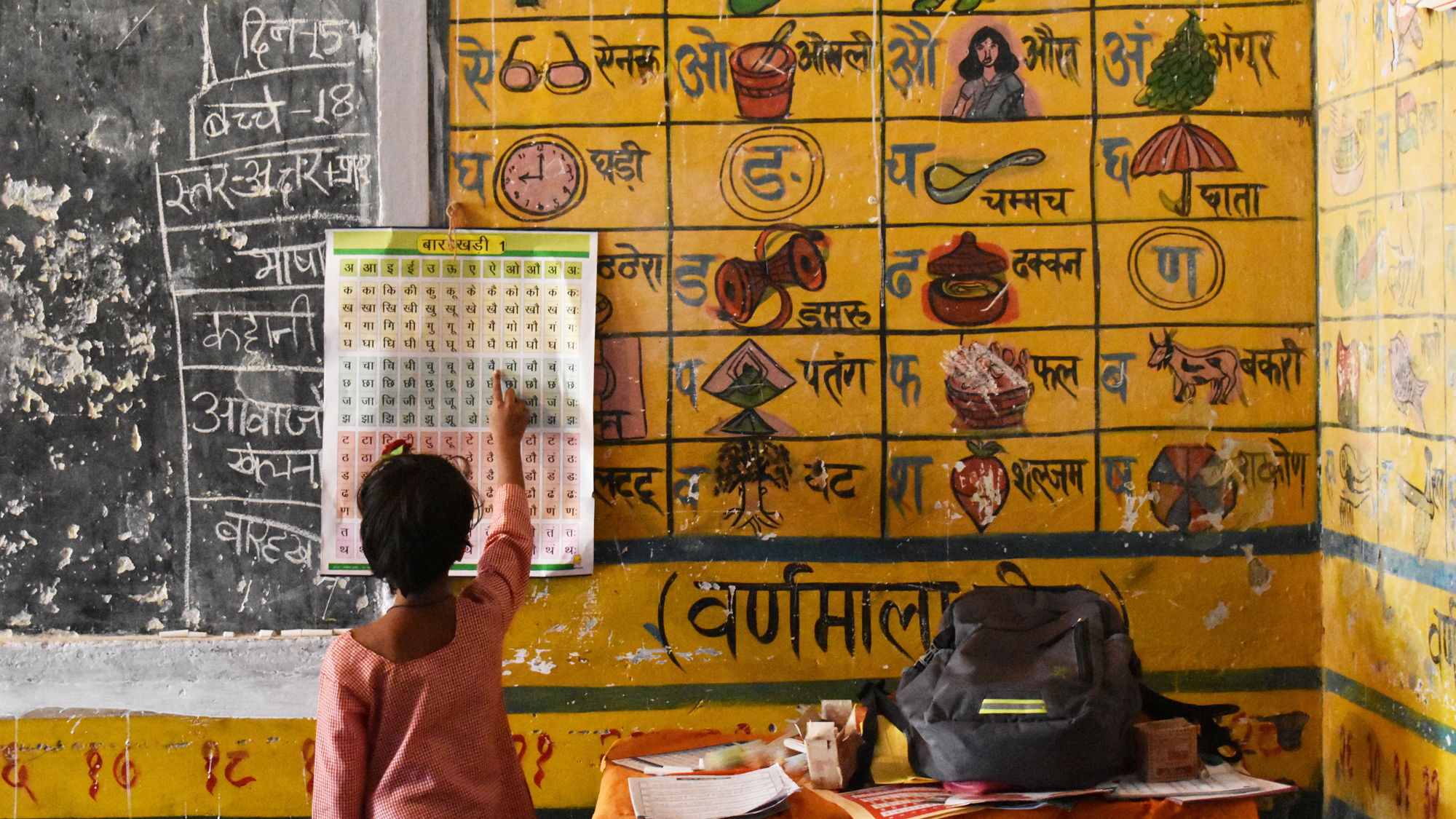
PHOTO: COURTESY OF PRATHAM
There, getting children up to grade level in basic reading and math skills seems to be even tougher. In India, government reports show that enrollment rates for primary school students top 95%. But those same reports suggest that fewer than half of the country’s fifth graders can read at a second-grade level. Surveys reveal similar problems in sub-Saharan Africa, where 80% of children are enrolled in primary schools, but only one in 10 can read or recognize numbers by age 10.
“Children are enrolled in school, and classrooms are often full,” says John Floretta, global deputy executive director at MIT’s Abdul Latif Jameel Poverty Action Lab (J-PAL). “But teachers are incentivized to follow and finish their grade’s syllabus. If you’re a student and you’re not where you should be at grade three or four, you will continue to fall further behind each year.”
J-PAL has been instrumental in helping countries develop students’ basic skills, first in India, and more recently in sub-Saharan Africa. Cofounded by MIT economists Esther Duflo and Abhijit Banerjee in 2003—Duflo and Banerjee were awarded the Nobel Prize in Economics in 2019, along with then Harvard economist Michael Kremer, now at the University of Chicago—J-PAL teamed with Indian educational NGO Pratham in the 2010s to evaluate a Pratham program called Teaching at the Right Level (TaRL). In TaRL, students spend 90 minutes of each school day in groups determined by learning levels, often across grades. “Kids were grouped with other kids at their same learning level,” says Floretta, who observed the program in person while working in J-PAL’s India office. “Not where the curriculum expected them to be, but where they were. It was interactive and it was fun, even for the teachers.”
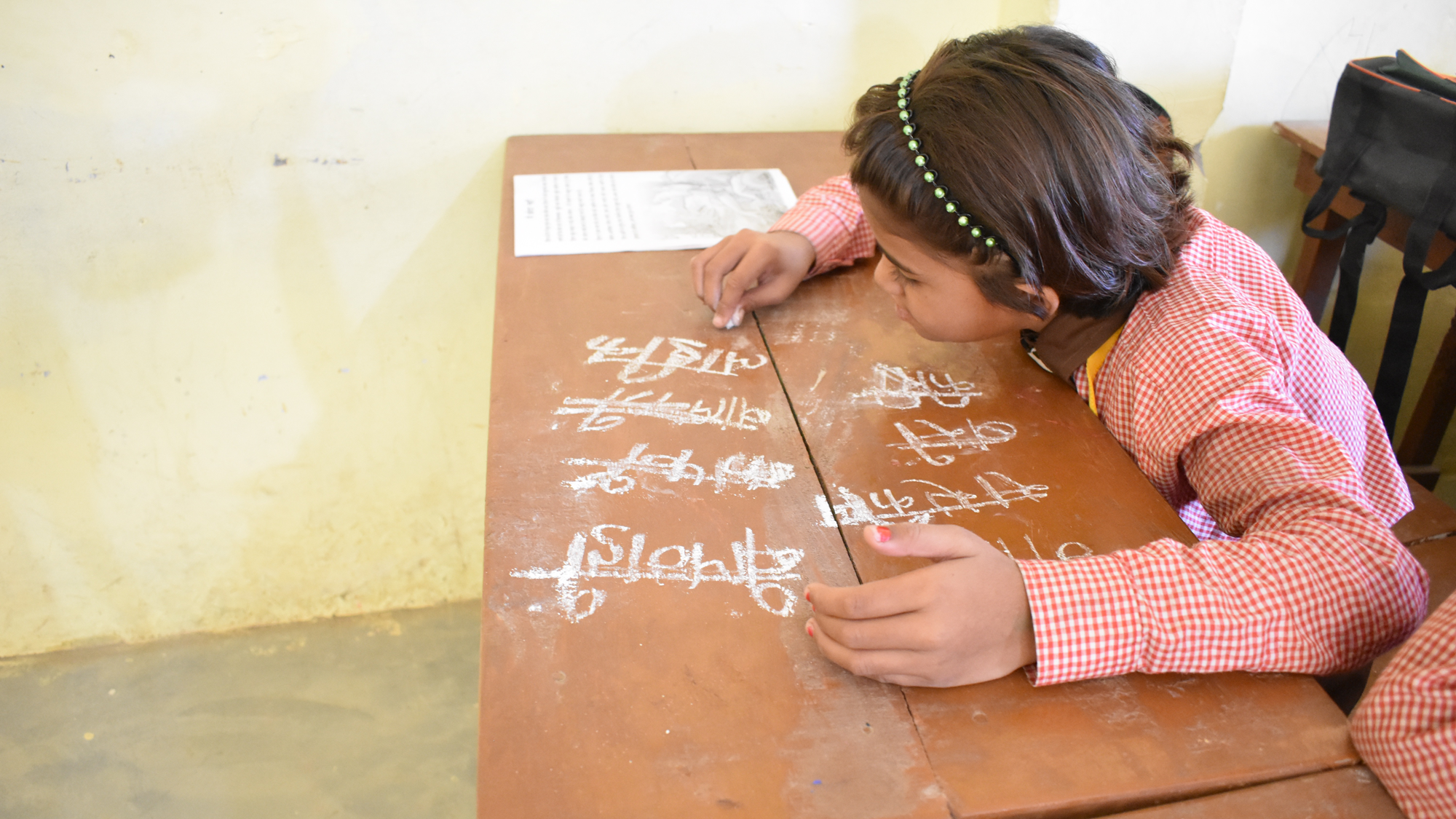
PHOTO: COURTESY OF PRATHAM
J-PAL’s impact evaluations of TaRL in India looked at how the program was implemented in classrooms, and measured improvements in skills and test performance. The evaluators also observed how Pratham established partnerships with various Indian state governments, NGOs, and donors to extend the program from Mumbai to other Indian cities as well as to rural areas. Banerjee, who is the the Ford Foundation International Professor of Economics at MIT and cofounder of J-PAL, helped lead the evaluations, and was impressed with Pratham’s vision for TaRL as well as with its flexibility. “They thought about scalability from day one, even when the organization was quite small,” says Banerjee. “In addition, they had the right metrics and focus. In India, one main issue was how to integrate the program into the school day. We saw that every state did this in a slightly different way.”
A move into Africa
In 2015, the Zambian Ministry of Education, concerned about their country’s struggles in teaching foundational skills to students, invited educational partners to propose ideas for potential remedies. J-PAL Africa shared reports of several methods they’d observed around the world. The Zambian government found TaRL to be the most impressive program. “Various surveys in East Africa made it clear these countries had very similar educational problems as in India,” says Banerjee, at the time both an MIT professor and scientific director with J-PAL Africa’s office in Cape Town, South Africa. “There was wide dispersion in where the kids were within the same classroom, and very few were at grade level in terms of basic competencies. That, plus the shared colonial heritage with India, convinced us that it was worth trying out TaRL.”
The TaRL rollout in Zambia began slowly, with three different models tested in 80 schools. While the situation in Zambia in many ways mirrored the one J-PAL had encountered in India, there were key differences. “Classroom sizes tend to be much larger in sub-Saharan Africa,” explains Floretta. “And there are greater distances between schools, with far worse roads. It’s harder for advisors to travel from one school to another or to distribute materials.”
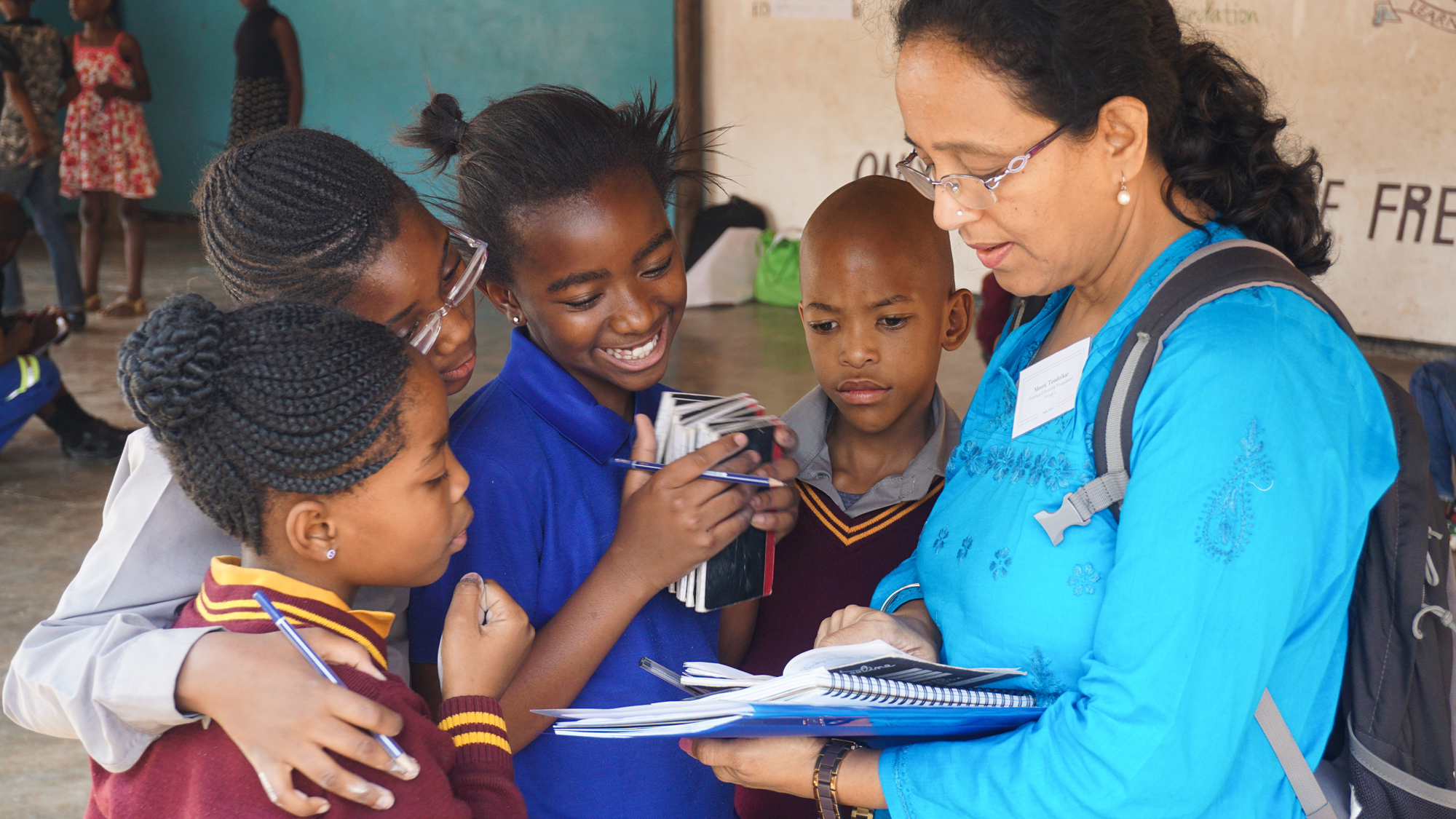
PHOTO: YOUNG1OVE
In addition, where TaRL instruction in India was primarily in Hindi or English, students in Zambian schools learned in over a dozen languages. J-PAL, Pratham, and its partners knew that they could not implement a carbon copy of the India program. “We were determined to contextualize this India-based program and make it relevant to an African country,” says Floretta.
The partners developed learning materials in local languages. And the program took hold, delivering promising results, particularly among students whose skills were the weakest. A $5 million grant from USAID helped bring TaRL to 1,800 Zambian schools. By 2019, a consortium formed by the Zambian Ministry of Education, Pratham, J-PAL, and their NGO partners had brought TaRL to nearly all of Zambia’s 9,000 schools. Pilot TaRL programs had been launched in Botswana, Cote d’Ivoire, Nigeria, and Uganda. Each successive program was customized to meet the client’s needs, blending public, private, and NGO funding and administration.
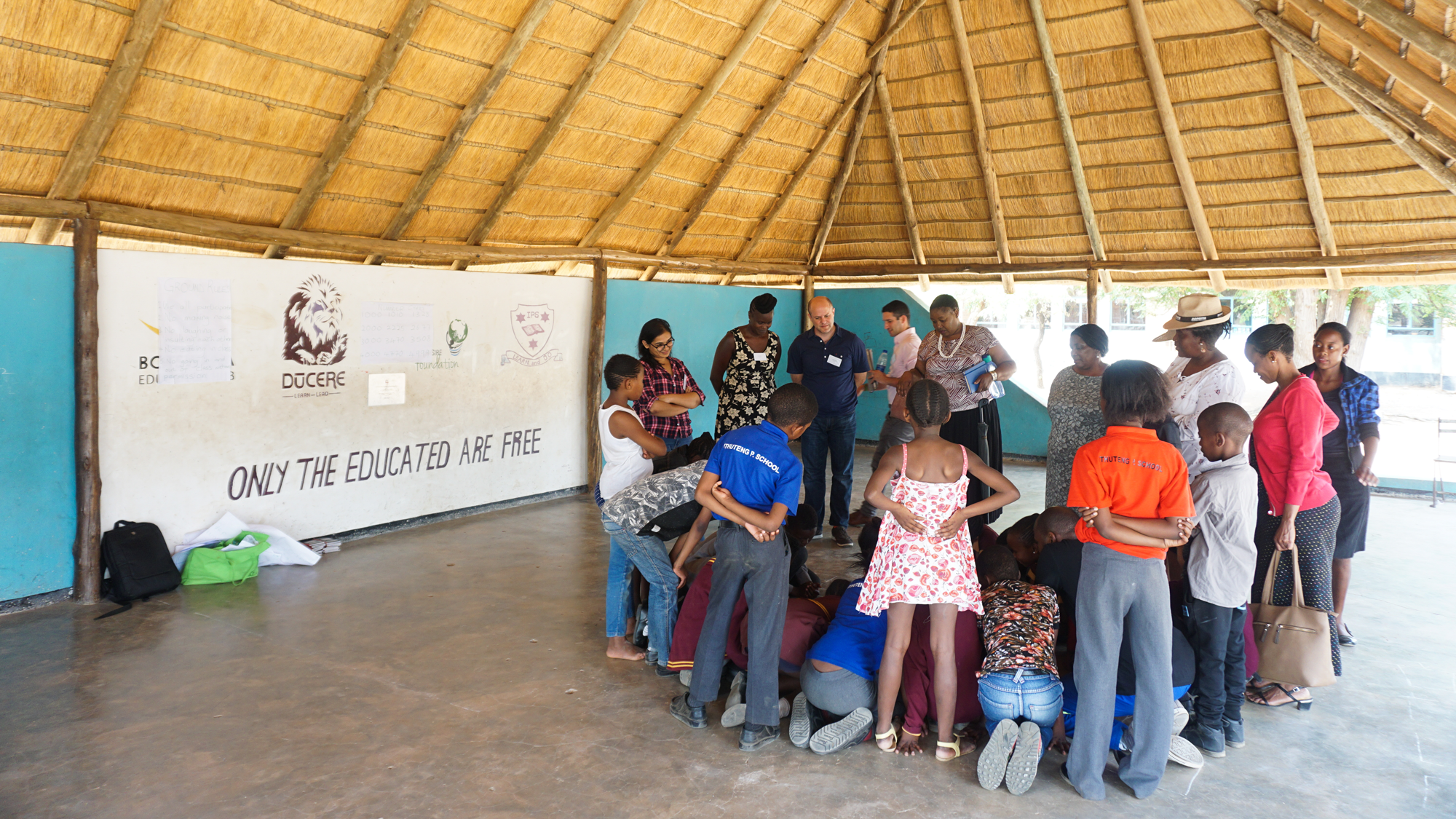
PHOTO: YOUNG1OVE
Impressive results and broader implementation
TaRL’s steady growth and spectacular results—studies show that the program can double or even triple the number of children able to read and do arithmetic in fewer than 100 days—drew the attention of major global funders, including the World Bank and the Swiss-based Jacobs Foundation. In 2019, Co-Impact, a US-based consortium with a strong interest in education, earmarked $25 million toward a broader implementation of TaRL in Africa. J-PAL and several other MIT offices helped administer the grant, serving as custodians and facilitating the creation of TaRL Africa, the Kenya-based NGO that would eventually oversee all TaRL activities on the continent.

Time it takes for TaRL to double or even triple the number of children able to read and do arithmetic after program implementation.
Fully independent and autonomous this year, TaRL Africa now manages dozens of partnerships and scale-ups across Africa. Working with local, regional, and international partners, tailoring solutions to each country or state’s specific context, TaRL Africa has reached more than seven million children. (More than 80 million children have participated worldwide.) The organization plans to bring the TaRL program to more than 20 African countries by 2030.
“Sometimes the classrooms are indoors,” says Floretta. “Sometimes they’re outside under a tree. Sometimes the materials are a bunch of sticks. Sometimes kids learn by singing songs. But wherever the program is implemented, there is a burst of energy and delight in the middle of the school day.”
HELP FIND AND SCALE UP THE MOST PROMISING SOLUTIONS TO GLOBAL POVERTY
J-PAL’s Innovation in Government Initiative (IGI) funds on-the-ground advisory work with governments to adapt, pilot, and scale evidence-informed innovations with strong potential to improve the lives of millions of people living in poverty. You can provide financial support to drive this work forward, bridging the gap between research discoveries and delivering effective programs at scale. Learn more about the IGI and make your gift.