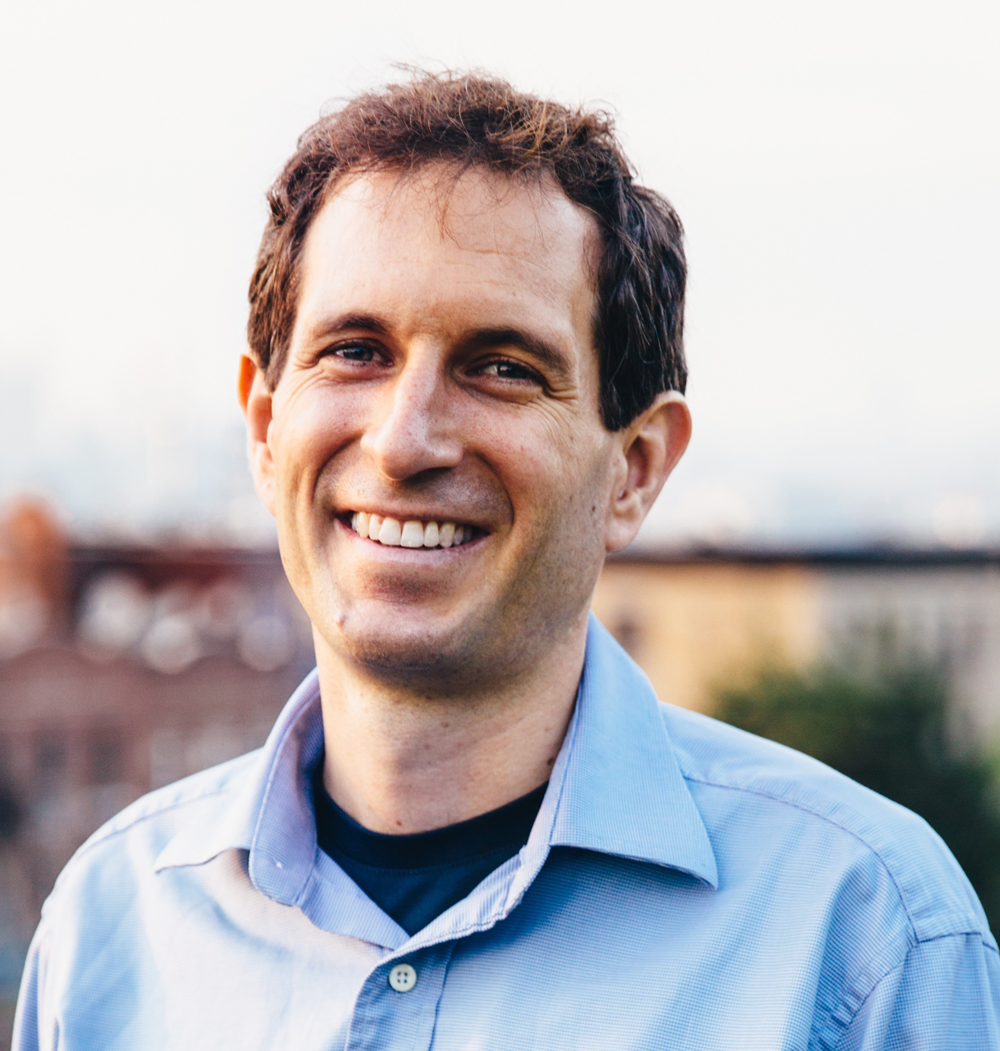
PHOTO: COURTESY OF JUSTIN STEIL
A few years after joining MIT School of Architecture and Planning (SA+P) as a professor of law and urban planning, he took an Institute-sponsored EMT course and began volunteering with MIT EMS, responding to 911 calls and helping people in crisis. Steil even used a subsequent sabbatical to become a nationally registered paramedic—requiring extensive classroom instruction, hospital rotations, a field internship, and state and national exams.
Disparate impact of heat events
In recent years, Steil has integrated his volunteer emergency response work with his SA+P research, studying public health issues from the unique perspective of an academic expert with field experience in the topic he’s analyzing.
One example is his examination of the substantial increase in emergency calls on days with extreme heat and humidity, which have become more frequent. “It’s very unevenly distributed across the city,” he says. “Some neighborhoods have no increase in calls on the hottest days, where other neighborhoods have a really dramatic increase.”
What accounts for this varied response? “It relates to what types of homes people live in and jobs people have—whether they can sleep in an air-conditioned home or work from an air-conditioned office or have to work outside,” Steil explains. “Neighborhood vegetation and tree coverage also have an effect; even comparing neighborhoods that satellite data suggest have the same temperature, tree cover is associated with a reduction in emergency calls.” Studies have consistently shown that low-income neighborhoods in the United States have less vegetation and shade than wealthier zones. “Measures of social vulnerability, including poverty, socioeconomic status, social isolation, and age,” Steil continues, “are the factors we have found to be most strongly associated with an increased number of calls during extreme heat.”
Extreme heat events also impact the EMTs who respond, he says: “It makes the work even harder and more strenuous, and calls take longer because you have to move more slowly.” Steil’s research points to some short-term improvements for both responders and residents. “Given the particular vulnerability of some neighborhoods to extreme heat, EMS agencies could allocate more resources to really hot days and distribute those across the city differently.”
Longer-term solutions, he says, “include more energy-efficient and climate-controlled buildings that help people with the high costs of energy and improve indoor air quality and temperature. It means investing in vegetation and parks and tree coverage—and in public health departments, community-based organizations that build neighborhood-level collective efficacy and social connection, social service agencies that provide care for the elderly and disabled, and EMS agencies and fire departments.”
The inequality of disaster zones
Steil and his colleagues also study the public health and economic consequences of large-scale disasters. Earthquakes, hurricanes, fires, and floods, he points out, are tragic for everyone affected, but recovery is more difficult for people with low incomes: “After disasters, we see widening increases in wealth inequality, in part because even though all households have a really tough time, there are more federal and state recovery resources to help homeowners get back at least to their pre-disaster circumstances.”
Not so for renters, Steil explains, since both rents and evictions rise. “The rental housing stock, especially affordable rental homes, are more vulnerable to disasters than owner-occupied homes, because it is older and does not have the resilience that many modern building codes require and is thus more likely to be damaged or destroyed in disasters.” This damage contributes to a decrease in the supply of rental homes while displacement from owner-occupied homes can lead to an increase in demand, together driving up rents even for renters who were not directly affected. Evictions increase, likely in part because of increased rents but also because of job and income losses caused by the disaster.
When new housing gets built, it is frequently more expensive than the previous structures and can price households with low incomes out of the region entirely. Steil and his research collaborators hope that policymakers will heed their findings and work to strengthen disaster-related support for renters as well as homeowners through future legislation.
On the bright side, Steil says, some states have found creative ways to help renters through the nation’s largest affordable housing program, the Low-Income Housing Tax Credit program. “There’s a substantial increase in low-income housing tax credit allocations to disaster-struck counties, suggesting that states are repurposing the program to meet the needs of renters with low-incomes after disasters,” he says. Fortunately, in counties that experienced a severe flood, most of that increase in Low-Income Tax Credit housing is built outside of the 500-year floodplain. Even the small portion that is built within the floodplain under this program must meet strict environmental standards, making the new construction more resilient to future risks.
Having analyzed disaster recovery for many years, Steil is supportive of the Federal Emergency Management Agency (FEMA), noting the agency’s unique expertise. “They have teams of people who know how to arrive at a disaster, roll out immediate assistance, and set things up in partnership with the states and localities for longer-term assistance. States generally do not have the capacity to have that same level of resources, experience, and expertise constantly ready for a disaster that may not come in their state for five, 10, or 20 years—that’s the whole point of FEMA.”
Concrete solutions to public health challenges
Studying disaster recovery and responding to emergency calls, Steil has seen more than his share of “difficult things,” as he puts it. His work as a paramedic helps him cope: “I deeply appreciate and respect my fellow EMTs and paramedics, and I like our patients. I feel that it is a privilege to be able to help people in a moment of need.”
He also takes pride in research that leads to tangible, targeted policy interventions—ideas that improve urban planning and strengthen public health.