
PHOTO: KEN RICHARDSON
“I love to find different interests and fall down rabbit holes,” says the biological engineering major from Fulshear, Texas, outside Houston.
“I get really passionate and excited about novel ideas. Being at MIT has allowed me to really delve into that.”
Ojeiduma is pursuing an Advanced Undergraduate Research Opportunity (SuperUROP) through the MIT Health and Life Sciences Collaborative (MIT HEALS) under the supervision of Bevin Engelward, professor of biological engineering. With the mentorship of research scientist Vandana Singh in the Department of Biological Engineering, she is investigating the effects of exposure to certain toxic chemicals on human physiology at the cellular level.
“We want to expand the literature to help with environmental regulations and increase our overall understanding of the impact of these toxins on human health,” she says.
“In the cases of certain chemicals that are classified as highly toxic, there hasn’t been much accompanying research into the changes these particular toxins can cause in cells or DNA,” she says. “We can do a literature search and find only one or two papers. We know that we can delve into this in depth and do research that no one has really published anywhere. So it’s very exciting.”
The MIT HEALS SuperUROP is a year-long research experience for juniors and seniors designed to support sustained, high-level undergraduate inquiry. In the 2025–2026 academic year, there were 18 active and funded SuperUROPS associated with MIT HEALS.
Building on MIT’s Undergraduate Research Opportunities Program (UROP), SuperUROP enables students to pursue a clearly defined research question while working closely with a faculty mentor. Alongside their research, students participate in a companion course that strengthens key skills in experimental design, scientific writing, and research communication, while also engaging in seminars and mentorship. They present their work at an annual SuperUROP showcase.
Ojeiduma also presented at the MIT HEALS Annual Symposium in March 2026. She was the only undergraduate to do so, having impressed the HEALS leadership with her showcase talk.
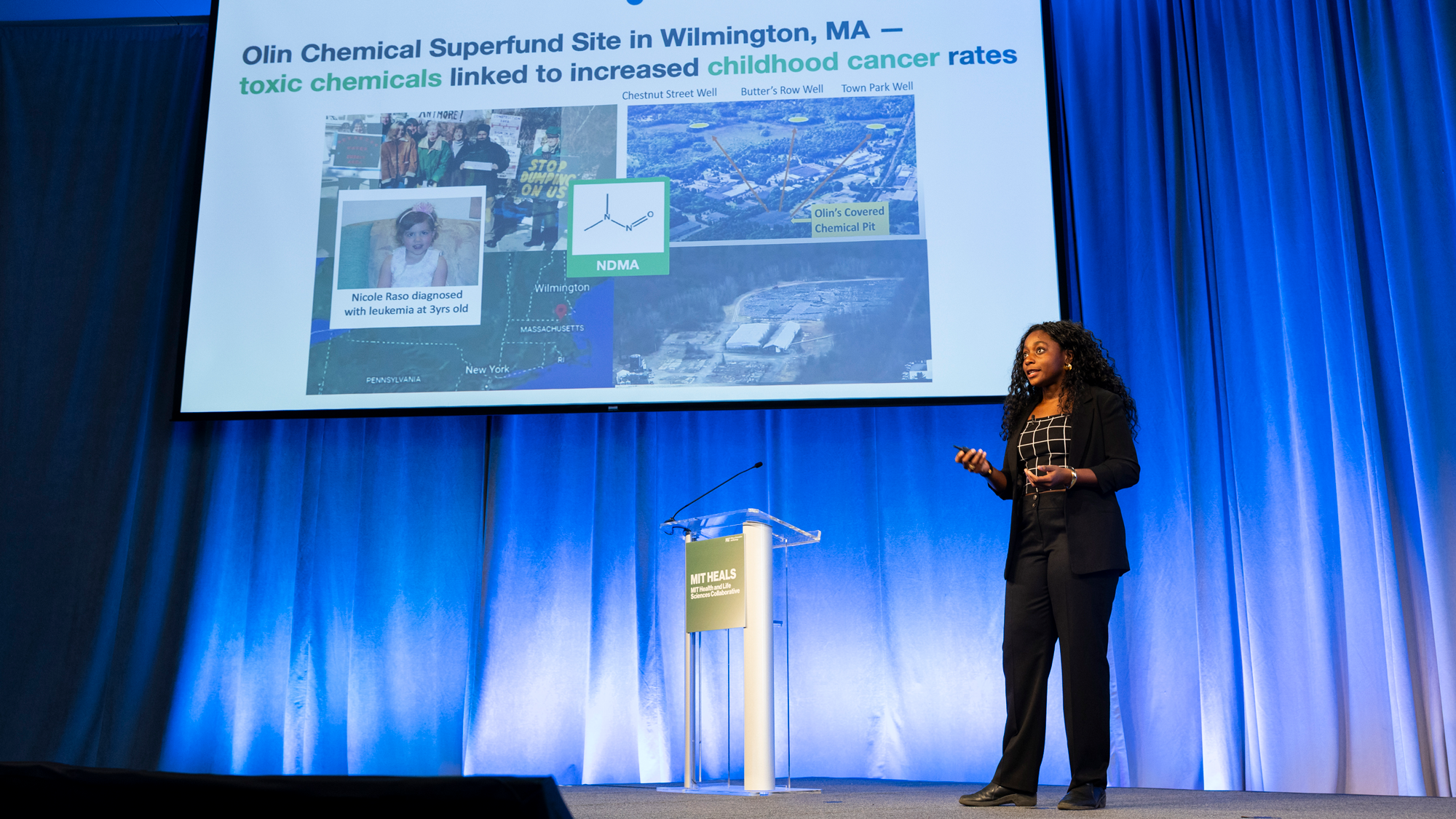
PHOTO: JAKE BELCHER
“It was a great opportunity to communicate not only technical info, but also the human impact of my research,” she says of her presentation at the MIT HEALS Annual Symposium in March 2026. “It was also super cool to share the stage with some absolute rockstar scientists.”
Ojeiduma says she enjoys lab research. “I’ve had some great experiences working with human cells,” she says. “It’s a powerful tool, when cells you’ve isolated in a dish are models for what happens in reality. I’m very interested in making those models as accurate as possible.”
She says her future career plans include working in the biotech industry and pursuing a PhD.
Embracing the MIT experience
Meantime, she is taking advantage of other opportunities MIT provides.
“In my free time, I love learning foreign languages,” Ojeiduma says. “I taught myself German in high school for fun. I wanted the challenge. When I got to MIT, they said, ‘Do you want to go to Germany? We’ll fund a summer research program.’” So the summer after her first year, she traveled to Marburg, Germany, to study at the Max Planck Institute for Terrestrial Microbiology.
She continues to dabble in other languages, she says. “I speak English, French, and German at a good level. I started learning Portuguese, speak a tiny bit of Mandarin, and some ASL (American Sign Language).”
She was able to practice her Portuguese during MIT’s Independent Activities Period this past January, when she traveled to Brazil for a capstone course in chemical engineering, Design of Sustainable Polymer Systems in the Amazon, taught in the capital city of Manaus in the rainforest state of Amazonas.
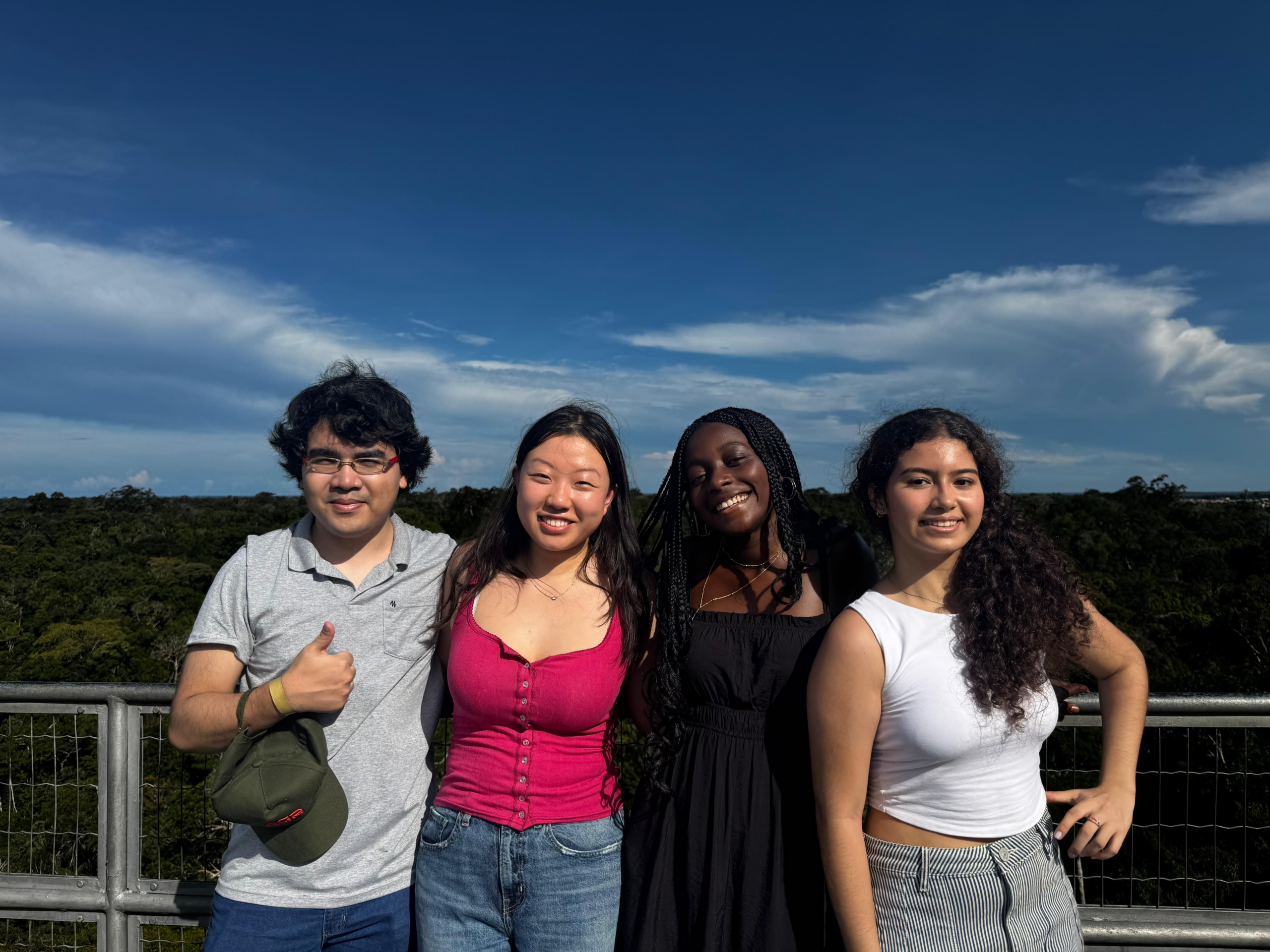
Ojeiduma is active in MIT Cru (Campus Crusade for Christ), sings in the MIT Gospel Choir, and performs with Rambax, MIT’s Senegalese drum ensemble. She has served as floor chair in her residence hall, Burton-Conner House, and she recently joined the MIT chapter of Engineers Without Borders, which is involved in an irrigation project in Tanzania.
She has embraced her experience at MIT where she has found “so many talented people with different skillsets and interests,” she says.
“MIT is just such a special place, a silly, fun, amazing place.”
SUPPORT MIT HEALS UROPS AND SUPERUROPS
Your support makes it possible for undergraduates to pursue yearlong research at a graduate level. Consider making a gift to MIT HEALS or the EECS SuperUROP Fund.