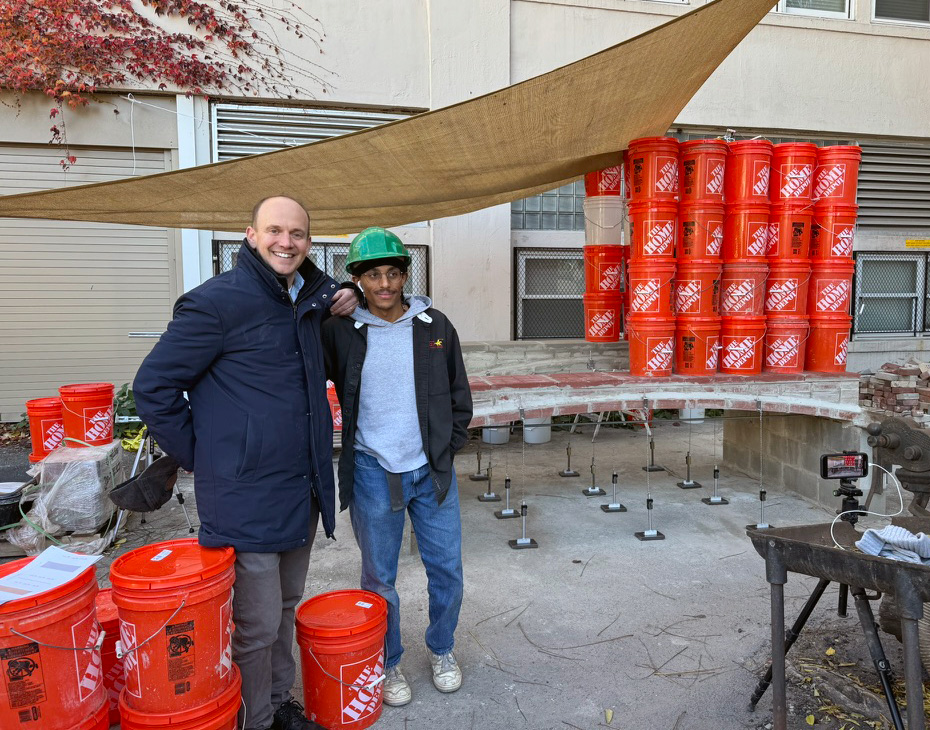
Nebyu Haile (right) with John Ochsendorf, the Class of 1942 Professor in the Building Technology program, where Haile is conducting his PhD research.
PHOTOS: COURTESY OF NEBYU HAILE
The answer tends to be a slab of brittle concrete shot through with a grid of reinforcing steel to add flexibility. The whole thing sits atop a series of slightly bendy beams. But all that concrete and steel is both costly and carbon intensive.
And yet, because it’s easy to pour concrete and lay rebar in such places, that is “the way we build today, for the most part, in Europe, in America, and in [other] more emerged economies,” says Nebyu Haile ’22, SM ’24, a PhD candidate in the Building Technology Program at MIT, in the School of Architecture and Planning.
For developing economies, however, the math doesn’t add up. “You have these countries who are building the most because they’re growing the most,” says Haile, “but they’re paying anywhere from 1.5 to 3 times as much for cement and steel because they have to import it.”
Sustainable construction, local materials, and labor
This dilemma drives Haile’s research at MIT. His goal is to develop alternative, more sustainable architectural solutions for flooring, relying on local materials and affordable labor. He’s exploring and testing his prototypes in Ethiopia, the country where he spent the first few years of his life and a place that, in his view, has challenges and opportunities typical of the Global South. It’s a part of the world experiencing a boom in building where he feels he can make an impact.
In 2026, Haile received a fellowship from the MIT Martin Family Society of Fellows for Sustainability to support his research. Celebrating 35 years in 2027, the Martin Family Fellowship is managed by the Office of the Vice President for Energy and Climate, home to the Climate Project at MIT. Each year, 10 outstanding doctoral students pursuing sustainability research in a wide array of fields and topics are selected for the fellowship. Since its founding, the program has supported 300 researchers.

Number of researchers supported by the Martin Family Fellowship since the program began in 1997
This fellowship offers Haile “a closer circle of people to exchange ideas” about environmental and sustainability topics that align with his interests. “I think that’s really valuable,” he says.
Haile’s flooring approach relies on the classic arch—extruded along two edge beams to form a vault that the finished flooring surface sits upon. The arch is remarkably efficient structurally, which allows it to be built using affordable, lower-strength materials like local construction waste from a demolished building or compressed earth with small amounts of stabilizing cement. So, it’s adaptable to the place where it’s built.
Arches don’t need to be reinforced with steel rebar. Indeed, the arches of antiquity were built entirely from stone without any concrete or steel. Rather, the building technique channels the force of any mass placed atop it sideways and downward.
Haile has traveled to Addis Ababa, Ethiopia’s capital, multiple times as a graduate student, allowing him to conduct field projects in partnership with local professors and students. Together, they’ve tested the strength of different materials and built new architectural designs to get a sense of their practicality and costs.
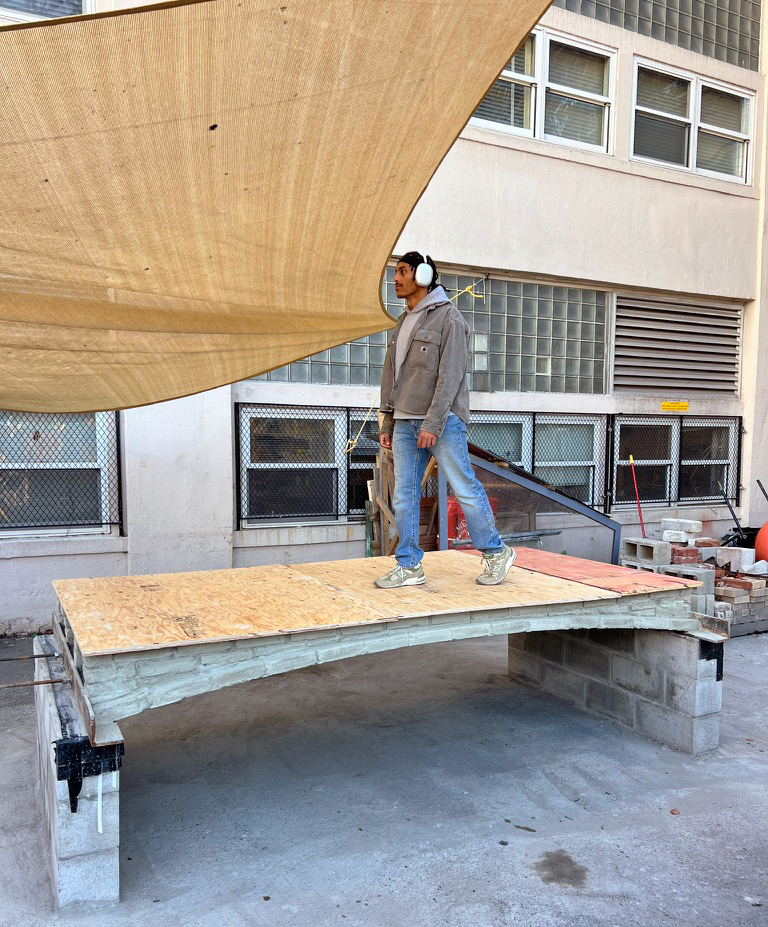
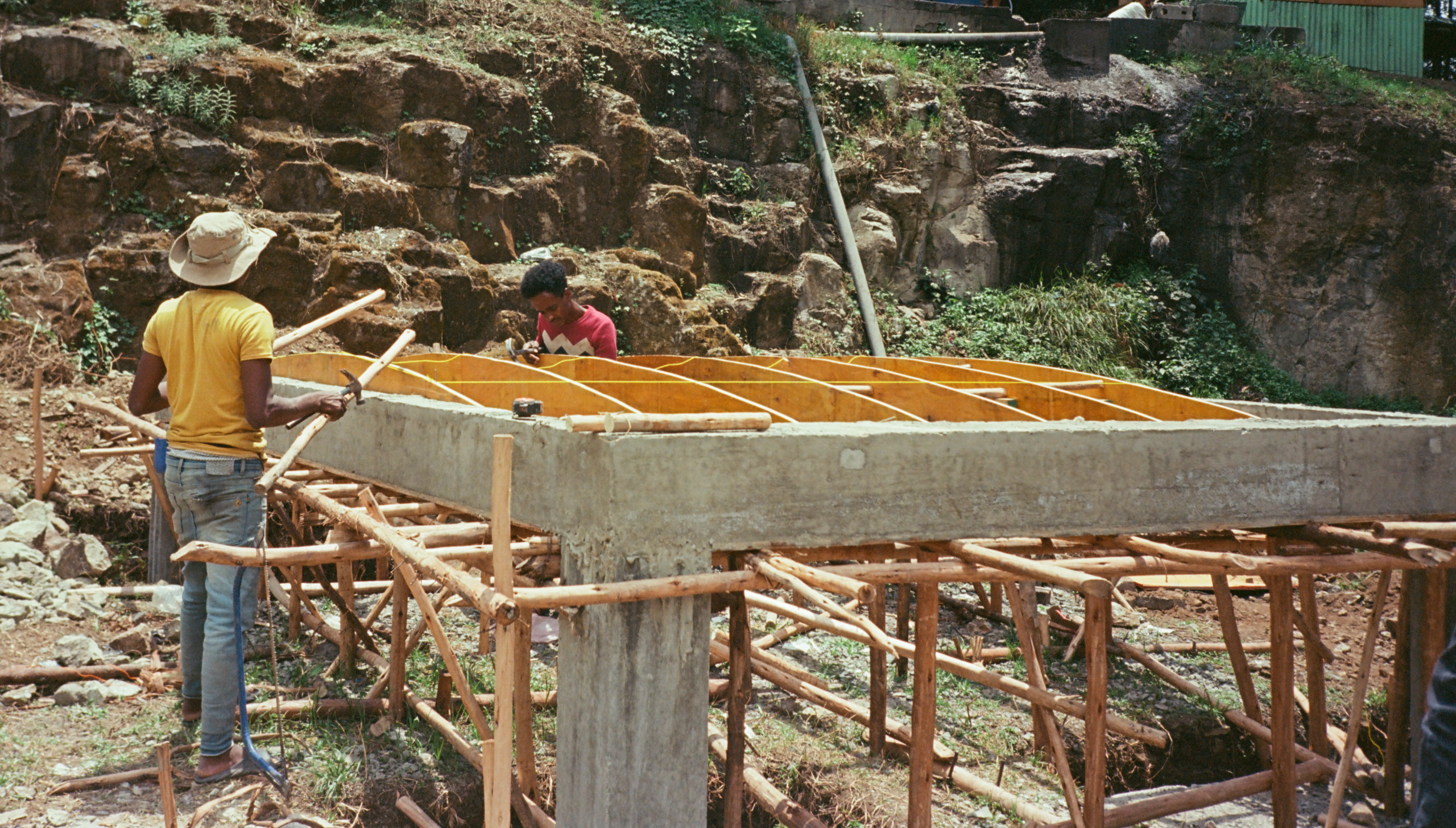
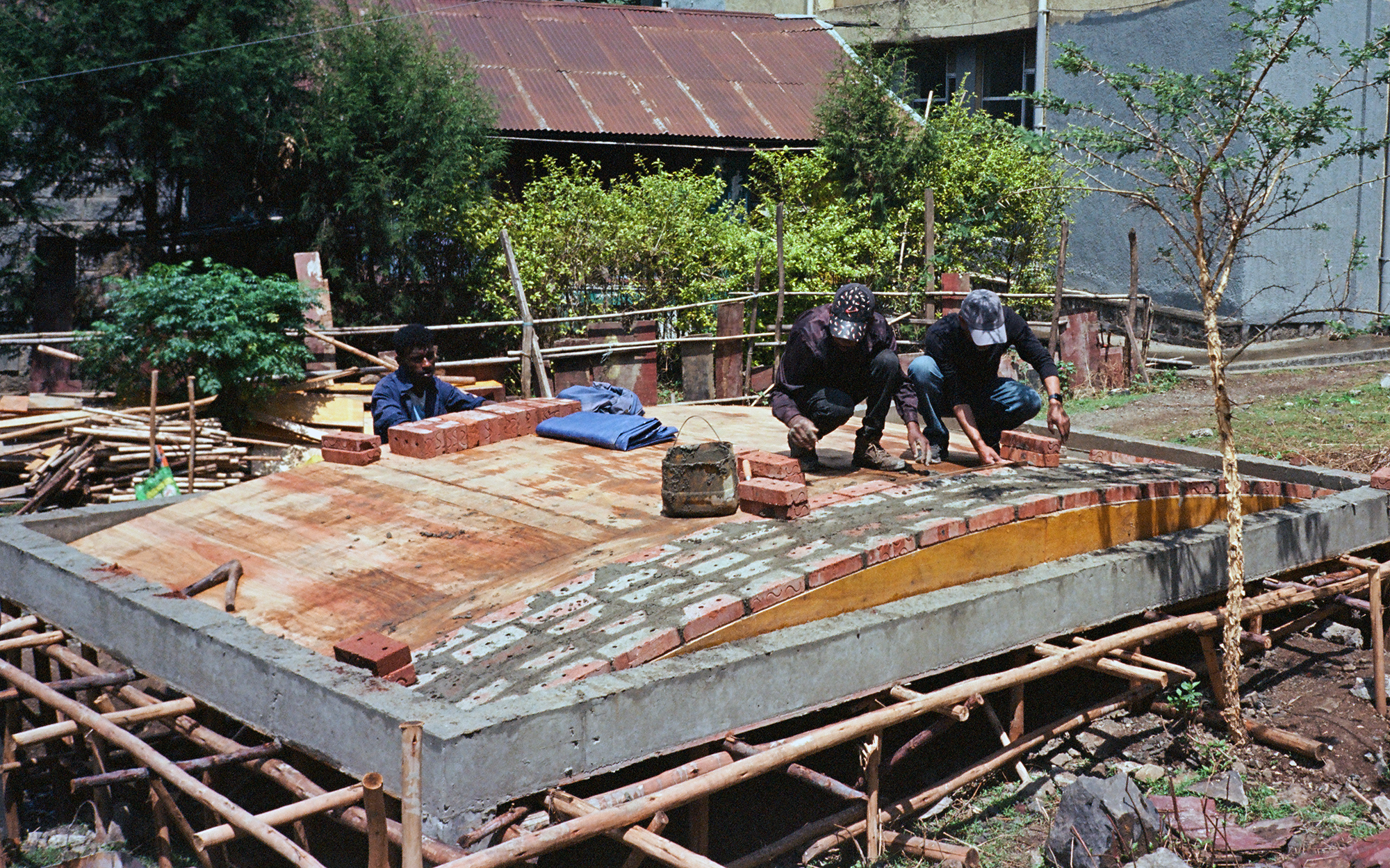
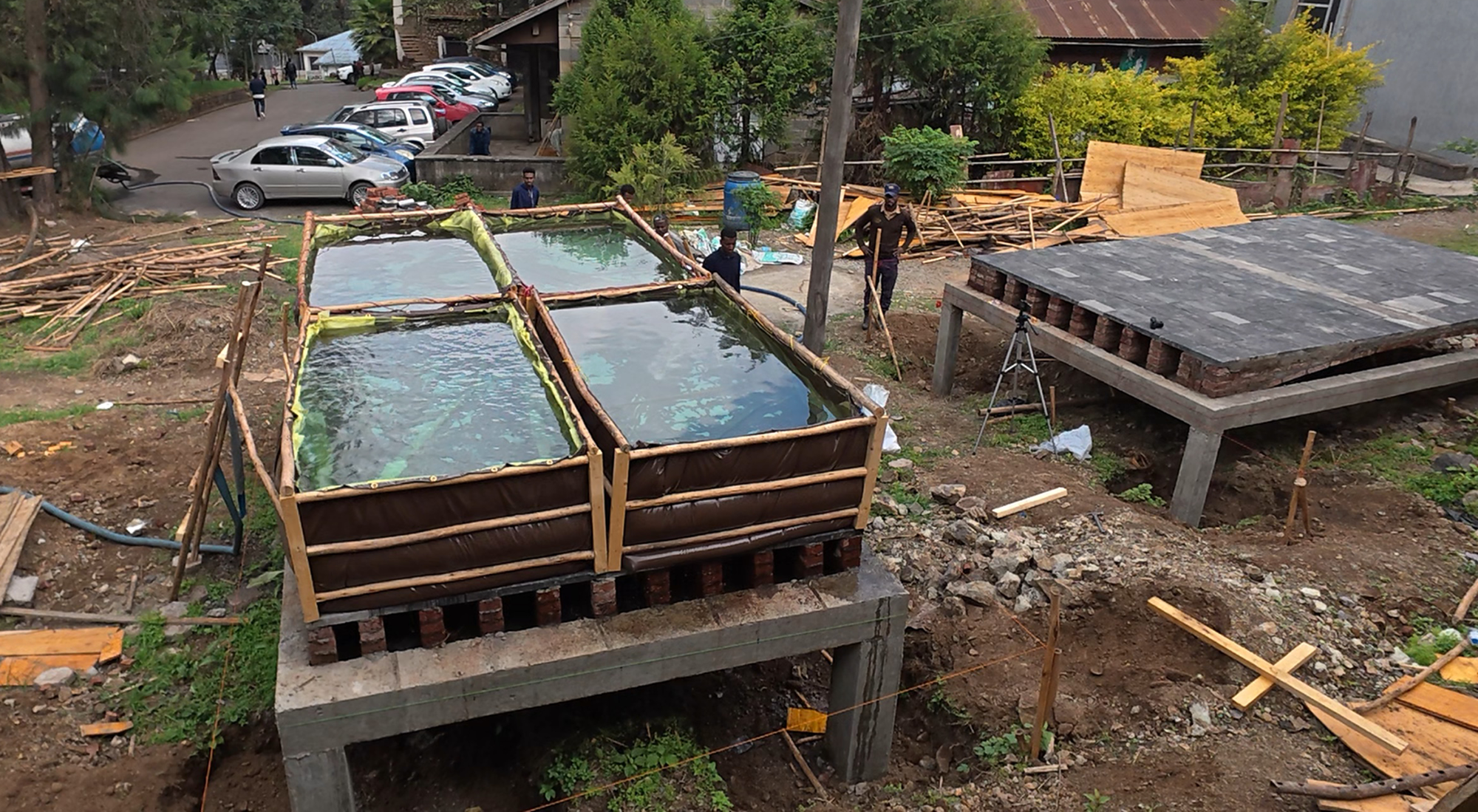
The process requires more labor, which helps create jobs. Plus, says Haile, “the work that we’ve done always comes out cheaper and better for the environment.”
In fact, he and his colleagues have quantified up to a 60% reduction in cost and carbon when arches are used, depending on the size of the building. Concrete and steel are still required to construct the frame, but because the floor is where the biggest expenses and carbon loads are found, a vault is elegant, economical, and eco-friendly.
Building trust in his ancestral homeland
The local collaborations that Haile and his colleagues have pursued involve building something far more fragile than a floor or vault; they require trust. “We can make a million computer models and tell people that something works,” he says, “but a lot of this prototyping is inviting engineers, construction people, masons, and letting them see these kinds of systems in action.”
Demonstrating that this alternative flooring construction can support 10 tons of weight goes a long way toward convincing people the approach has merit. “There is a beauty in that,” says Haile. In addition, he and his team are open to receiving feedback and revising their designs to accommodate local constraints and customs.
The complexity of Haile’s field efforts has evolved over time. Early on, he recalls making over a thousand bricks by hand. “It’s amazing to build something full scale, stand on it, test it,” he says—but it was also laborious and time-consuming.
It’s the blend of the technical and the aesthetic that helped Haile fall in love with architecture. “There’s no one right answer,” he says. The field is “a lot more human, a lot more open. That’s a different type of challenge when it comes to problem-solving and creativity.” In his view, this combination is an embodiment of MIT’s “mens et manus” motto that reinforces the value of working with the mind and the hand.
Haile has been able to witness ideas that he’s conceived at MIT come to life in the country where he and his parents were born, and from which they immigrated to the United States decades ago. He feels that he is fulfilling the wishes of his parents: “I was very much raised to keep where I came from in mind,” Haile says.
SUPPORT THE TALENT BEHIND CLIMATE SOLUTIONS
Competitive fellowships such as the Martin Family Fellowships for doctoral students provide essential funding for outstanding researchers pursuing high-impact climate work. Your philanthropic support, through the Climate Project at MIT, can help prepare the next generation of academic, policy, and industry leaders and accelerate the translation of breakthrough discoveries into deployable solutions. Make your gift.