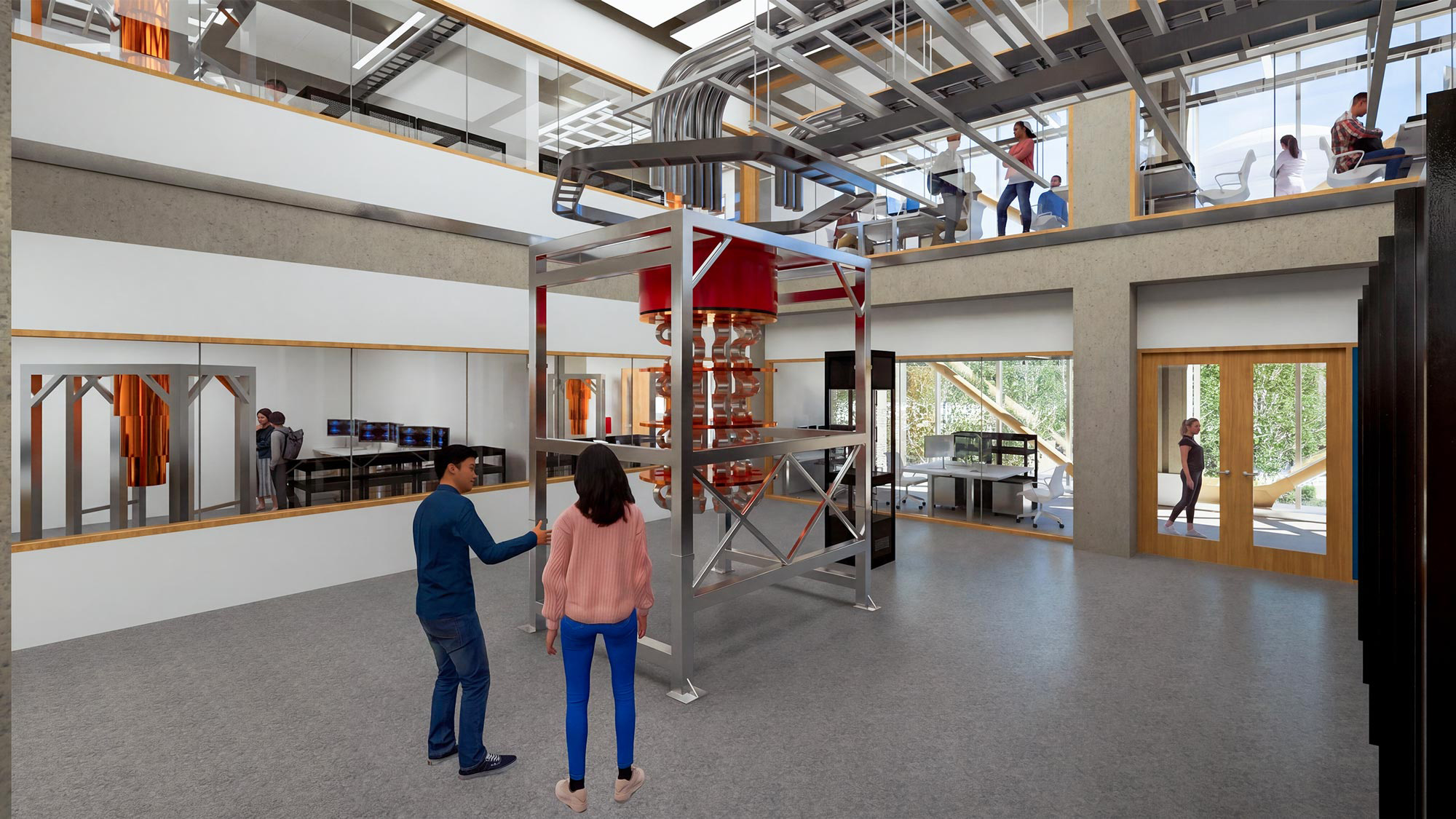
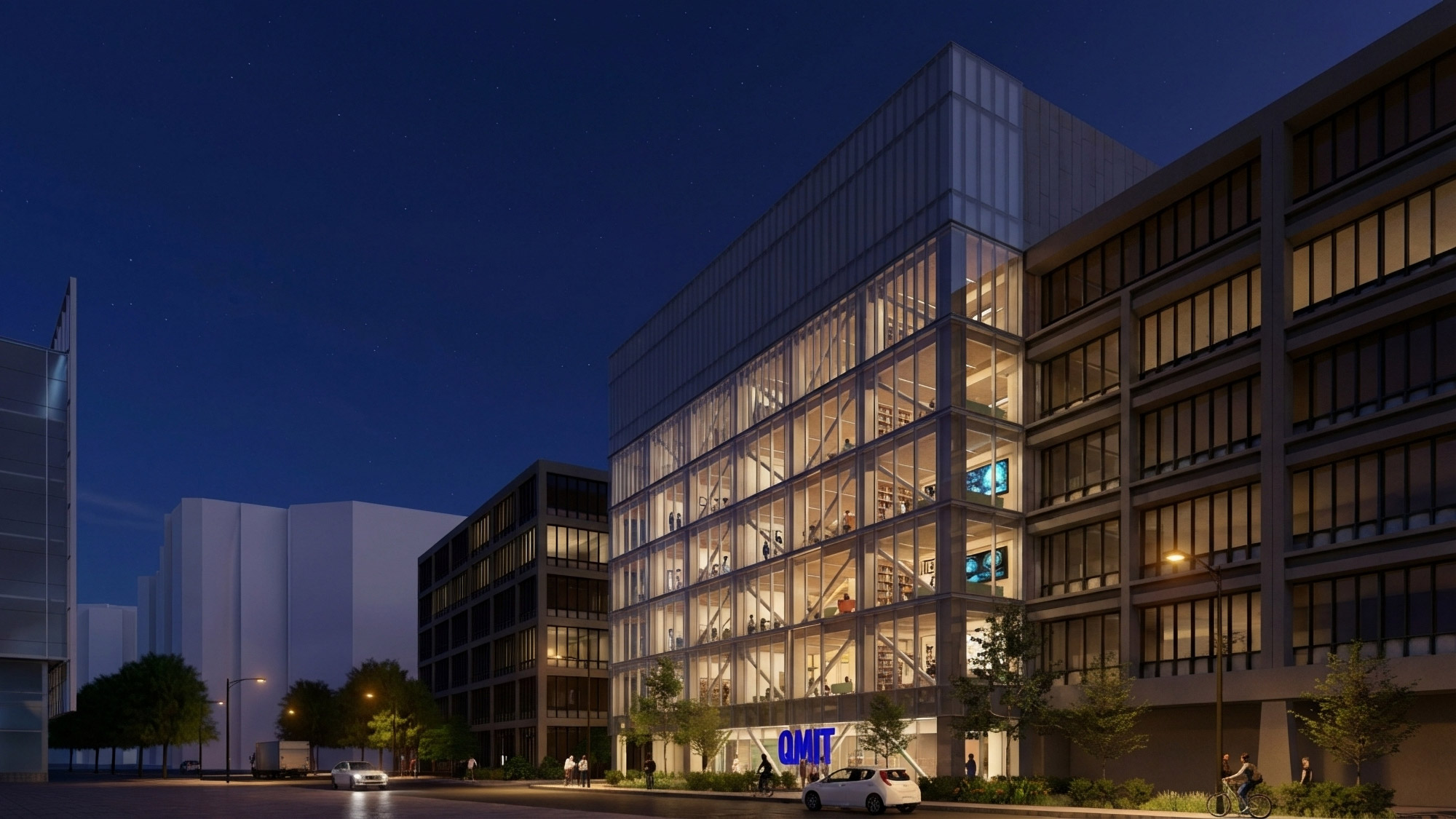
The Quantum Systems Laboratory will host two double-height quantum computing rooms. These will be flanked by pump rooms, electronics labs, and space for laboratory work, including culturing tissues, preparing biological samples, and preparing chemicals.
IMAGES: HGA ARCHITECTS
“The field is at a point where much of what quantum computing will enable is still unknown,” he says. “It’s a really exciting inflection point for quantum sensing, computing, and communications, with a tremendous amount of work being done across the globe.”
Waitz, who is also the Jerome C. Hunsaker Professor of aeronautics and astronautics, continues: “The question is, how can we apply quantum to different application areas to realize some of the dramatic improvements in capabilities that may be possible?”
MIT is a hub for quantum research, and the MIT Quantum Initiative launched in 2025 by President Sally Kornbluth, aims to accelerate breakthroughs in quantum science and engineering that would create transformative new opportunities in science, industry, and national security. “There isn’t a more important technological field right now than quantum, with its enormous potential for impact on both fundamental research and practical problems,” Kornbluth said at the initiative’s kickoff event.
A new home for quantum
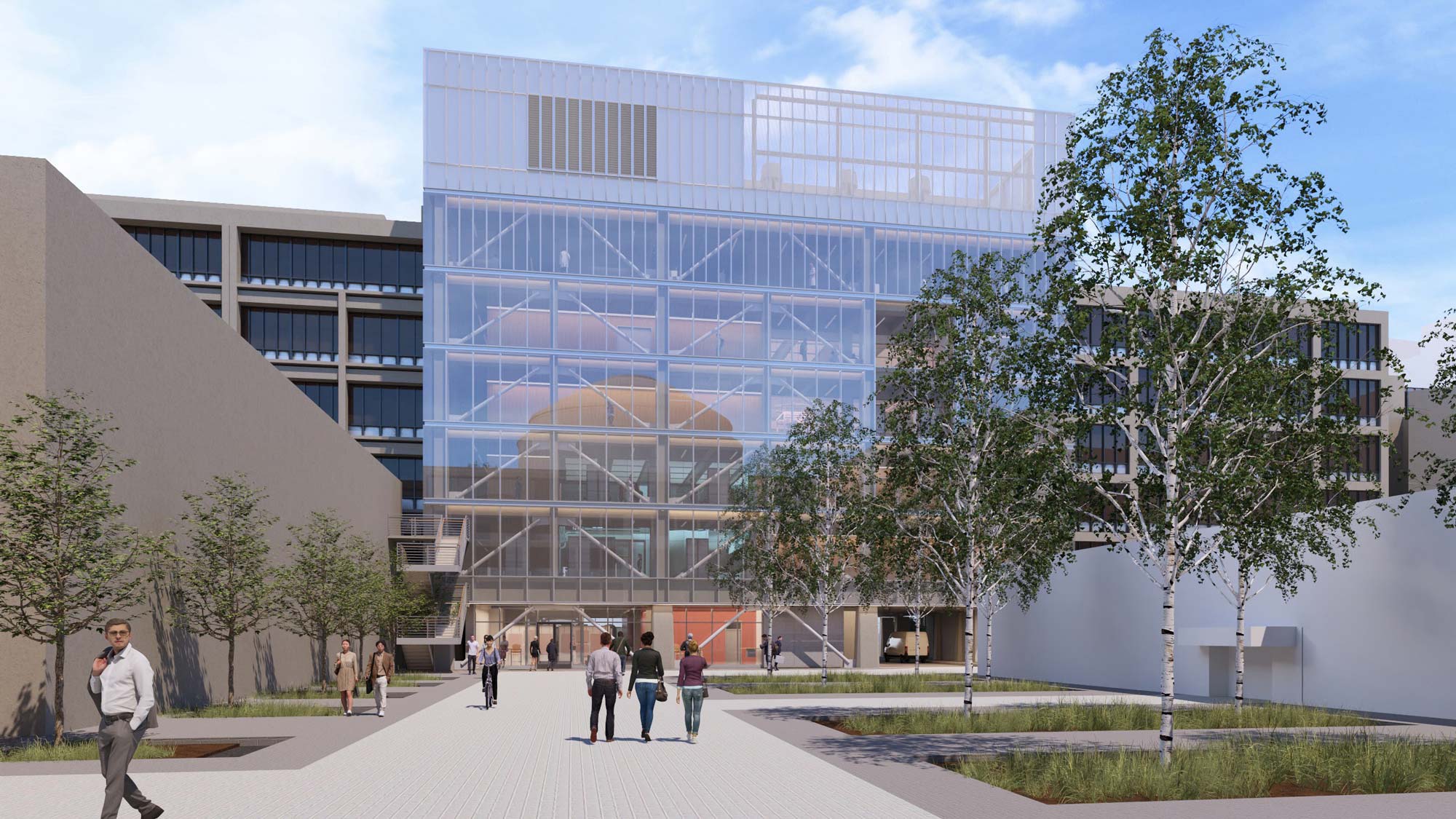
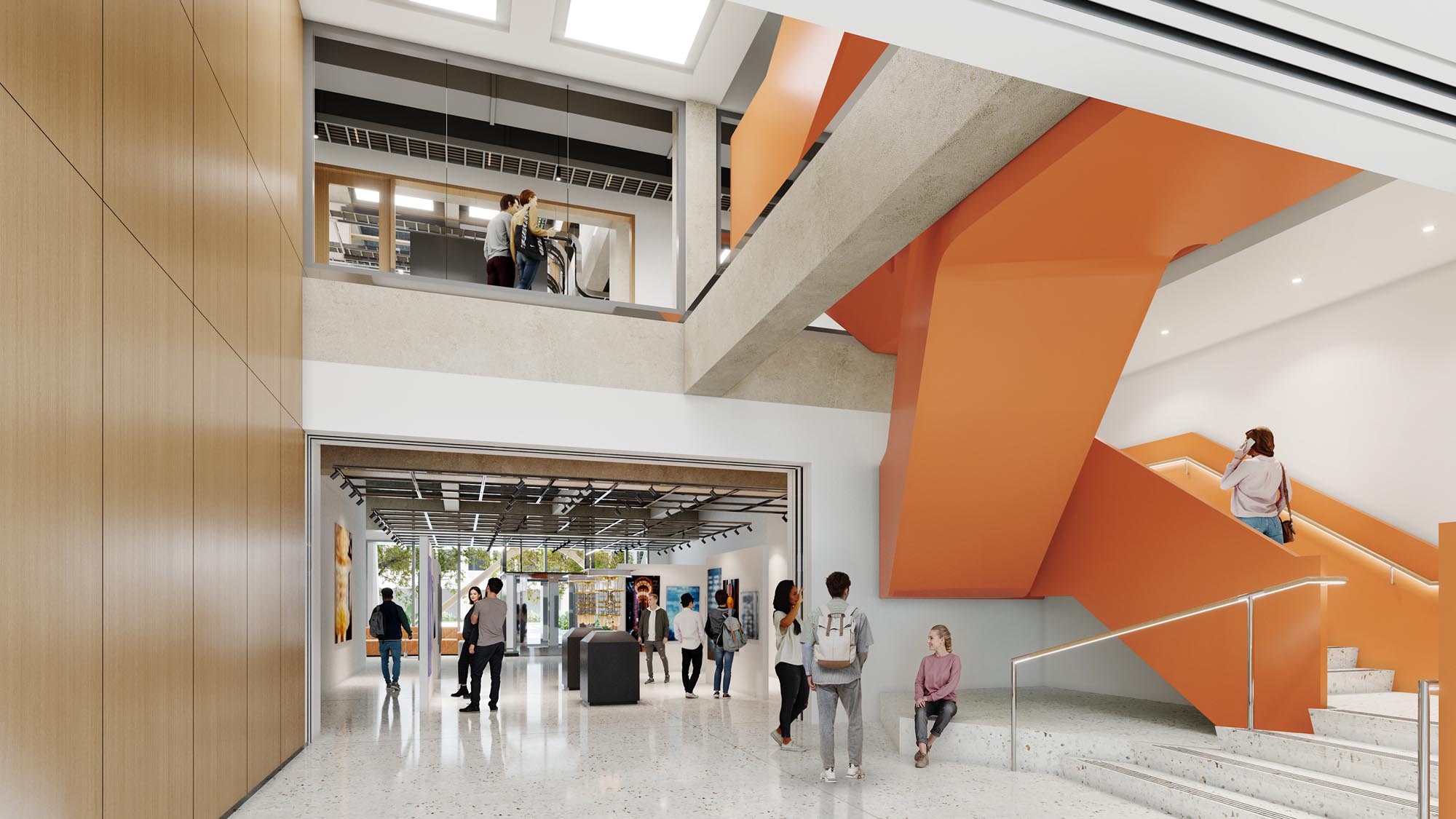
MIT is establishing the Quantum Systems Laboratory (QSL), a shared-use facility located in Building 39, that will also be the physical home of QMIT. “We will have spaces for quantum computers and quantum sensors next to wet labs and chemistry labs and biology labs,” says Waitz. “It is really intended to bring together people who have problems to solve with people with quantum expertise to see whether they can demonstrate quantum advantage for those particular problems. It’s designed to be a gathering place and a toolbox.”
Waitz points to MIT.nano, launched in 2018, as a model. “It has 1,500 users, and 350 of those are from outside the Institute. The Lisa T. Su Building [home to MIT.nano] has become a real hive of activity, so we know that the presence of these kinds of facilities can catalyze the community to come together to advance research in new ways.” MIT.nano is a state-of-the-art facility with more than 200 tools and instruments that enable imaging, fabrication, characterization, and prototyping. More than 30 companies have grown through the START.nano accelerator, 11 of them moving beyond prototyping stages in the last five years. “We are inspired by the success of MIT.nano,” says Waitz. “It’s a shared resource that accelerates discovery.”
The QSL, he says, “will be unique. We’re working to open it as quickly as possible because there are tremendous possibilities right now in the quantum space.”

Fellowships critical to quantum efforts
Just as the physical facility will have a catalytic influence on interdisciplinary research, new fellowships are expected to catalyze collaboration. Graduate students and postdoctoral scholars drive research forward at MIT in all disciplines, and attracting top talent to work with MIT faculty requires investment. “Funding fellows over multiple years so they can work across domains has a multiplying effect on the research enterprise because they can pursue some of these grand challenge areas,” Waitz says. “For example, we see great opportunities in quantum sensing in the life sciences. Offering seed funding and fellowships that span life sciences and quantum would amplify the connected efforts very effectively. Research fellows are hugely important to what we can accomplish on campus.”
MIT central to the field of quantum
You could trace the history of quantum technologies on a stroll through an MIT faculty meeting. One of the most significant early contributions to the field was made by Peter Shor, the Henry Adams Morss and Henry Adams Morss, Jr. (1934) Professor of applied mathematics and a recipient of the 2023 Breakthrough Prize in Fundamental Physics, whose eponymous algorithm first identified a computational means of harnessing quantum behaviors to solve a practical problem (prime factorization). Stratton Professor in Electrical Engineering and Physics Isaac “Ike” Chuang ’90, ’91, SM ’91 then led a team that implemented Shor’s algorithm and many others. More recently, exquisitely precise quantum sensors have been critical to the success of LIGO, the Laser Interferometer Gravitational-wave Observatory operated by MIT and Caltech. MIT quantum science and technology are already in emerging navigation systems, encryption methods, and more.
The key question, according to QMIT Faculty Director Danna Freedman, the Frederick George Keyes Professor of chemistry, is “What can we do next? We’re investing in the promise of quantum, and where the legacy will be in 20 years. We are going to change the forward momentum of quantum in a way that supports impact.”
SUPPORT FELLOWSHIPS IN QMIT
Researchers at QMIT seek to translate quantum breakthroughs into transformative solutions for some of the most consequential scientific challenges of our time. Funding for graduate fellowships supports exceptional early-career scientists pursuing bold, interdisciplinary research in quantum science. Make your gift for QMIT fellowships.