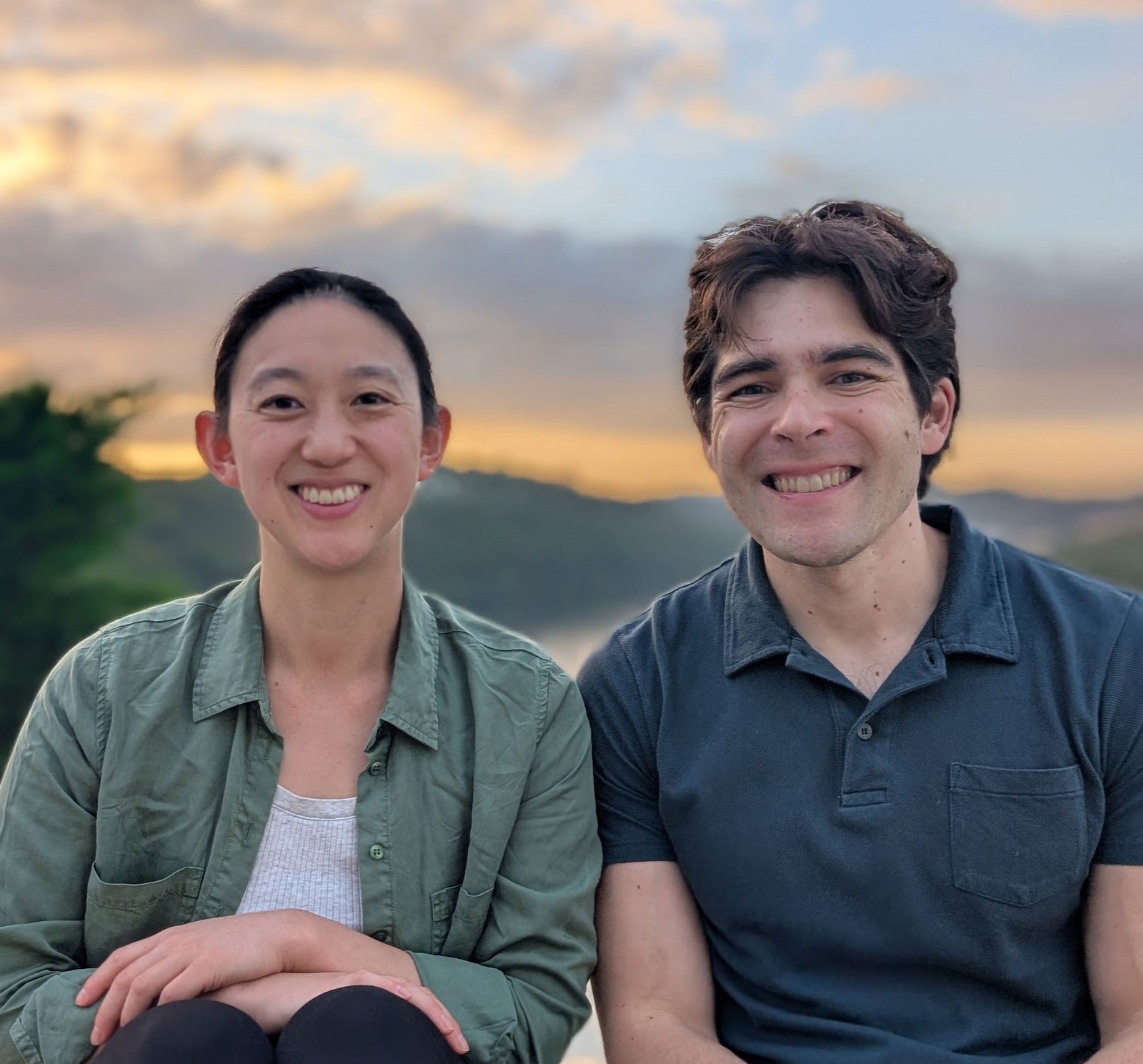
Starting Early with a Donor-Advised Fund In supporting MIT’s mission, Yuanyuan Pao ’11 and Alan Malek want to encourage other young people to consider giving
Every year since graduating from MIT, Yuanyuan Pao ’11 has volunteered as an educational counselor for the Institute, interviewing high school seniors in the Bay Area who are applying for admission.
“I tell this to those applicants every year, and I believe it more and more every year, which is: MIT truly is a place that’s trying to do better for the world,” where people who are passionate about STEM are using their expertise to try to address real-world challenges, she says. “MIT is a very special place.”
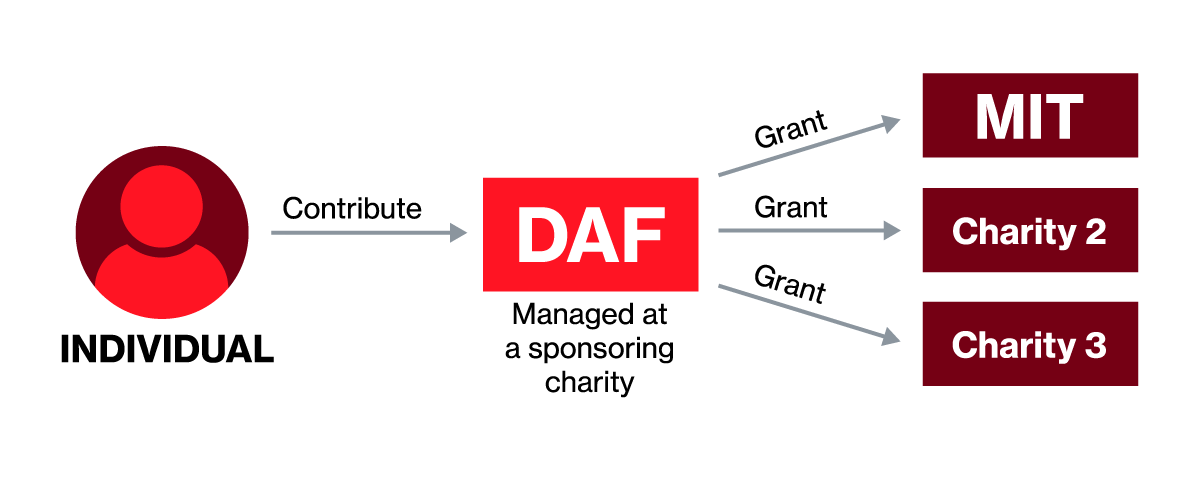
Because Pao and her husband, Alan Malek—who spent a year and a half as a postdoctoral researcher at MIT’s Institute for Data, Systems, and Society from 2017 to 2018—believe the Institute is unique in its ability to address these challenges, they chose to make it a beneficiary of their newly established donor-advised fund (DAF). The gift will provide flexible funding that MIT can direct where it’s needed most. “There’s a lot of trust that we have in MIT,” Pao says. “…to know where the money will be best used,” Malek continues.
“The two things I think that I wanted to accomplish are trying to enable people who couldn’t go to school to otherwise go to school and to enable communities where one college graduate in the family would make a big difference. Also, I wanted to enable the best to be able to solve big problems, because there are a lot of big problems coming that need solving. In my mind, MIT is the best place to do that,” he says.
Pao was particularly impressed by MIT’s 2024 announcement that undergraduates with family incomes below $200,000 can attend MIT tuition-free and those coming from families earning less than $100,000 can expect to pay nothing toward their education. “Even after leaving MIT, MIT still never ceases to amaze me,” she says.
For Pao and Malek, giving this year made sense. “We’ve crossed these major reunion milestones, and now we are starting to think a little bit more about ‘how can we give more?’” she says.
Moreover, Malek adds, they had some appreciated assets and preferred to see the gains grow in a DAF and go to MIT. “A DAF is a great vehicle for charitable contributions that also helps you reduce your tax liability.”
The couple, both in their 30s, considered keeping their gift anonymous but then decided not to in the hope that their philanthropy might “encourage other people, especially younger alumni, to start thinking about giving, even just establishing that habit of giving more regularly, or to put it in their plan,” Pao says.
Life-changing lessons
Pao and Malek, who have been together since their high school years in Northern California, both had early formative experiences at MIT. Malek attended the Research Science Institute, a six-week summer program, as a junior in high school, staying in Simmons Hall. It was this early experience of participating in research that he partly credits with his decision years later to go to graduate school (at Stanford, where he also earned his undergraduate degree, and the University of California, Berkeley).
“I clearly couldn’t quite kick the research bug,” says Malek, now a research scientist at Google DeepMind.
Pao, too, appreciated her early exposure to research, which she participated in during her years at MIT through the Undergraduate Research Opportunities Program. “MIT loves to emphasize problem-solving and being hands-on—the ‘mens et manus’ right?—where you’re not just smart, you’re not just people who are talented, you’re people who are willing to then do the work, to apply the learnings. And it shows through the way MIT allows undergraduates to get research experience right from the start,” she says.
Though Pao majored in Course 8 (physics), it was during her time as a senior in the Computer Science and Artificial Intelligence Laboratory (CSAIL) that she fell in love with data and started on the path that would lead her, eventually, to her current job as a data science manager at Lyft.
At CSAIL, she worked in computational genomics and realized how powerful data is and how it can be used to solve real-world problems. From MIT, she went to Stanford to study electrical engineering and computer science, looking for classes where she could learn more about data applications and model building.
Not only did her experience at MIT help Pao find her field, it helped her appreciate different perspectives. “That’s definitely steered a lot of what I do…because I now am a manager and leading teams, and it’s really interesting because I can appreciate that my team has their own ways of going about a problem.”
“MIT gives you humility, because then you realize you’re never going to be the smartest in the room, and that’s a great thing,” she says. Malek agrees: “Getting practice with talking to people who are smarter than you is very important. And, you know, you always run into that. There are lots of experts at my company, so it’s good to know how to be humble but also to be able to realize what you bring to the table and how to collaborate with people.”
It’s invaluable lessons like these that Pao and Malek hope others can learn at MIT as a result of their gift. “Because it is a special place, and we want MIT to be able to give this to more people,” she says.