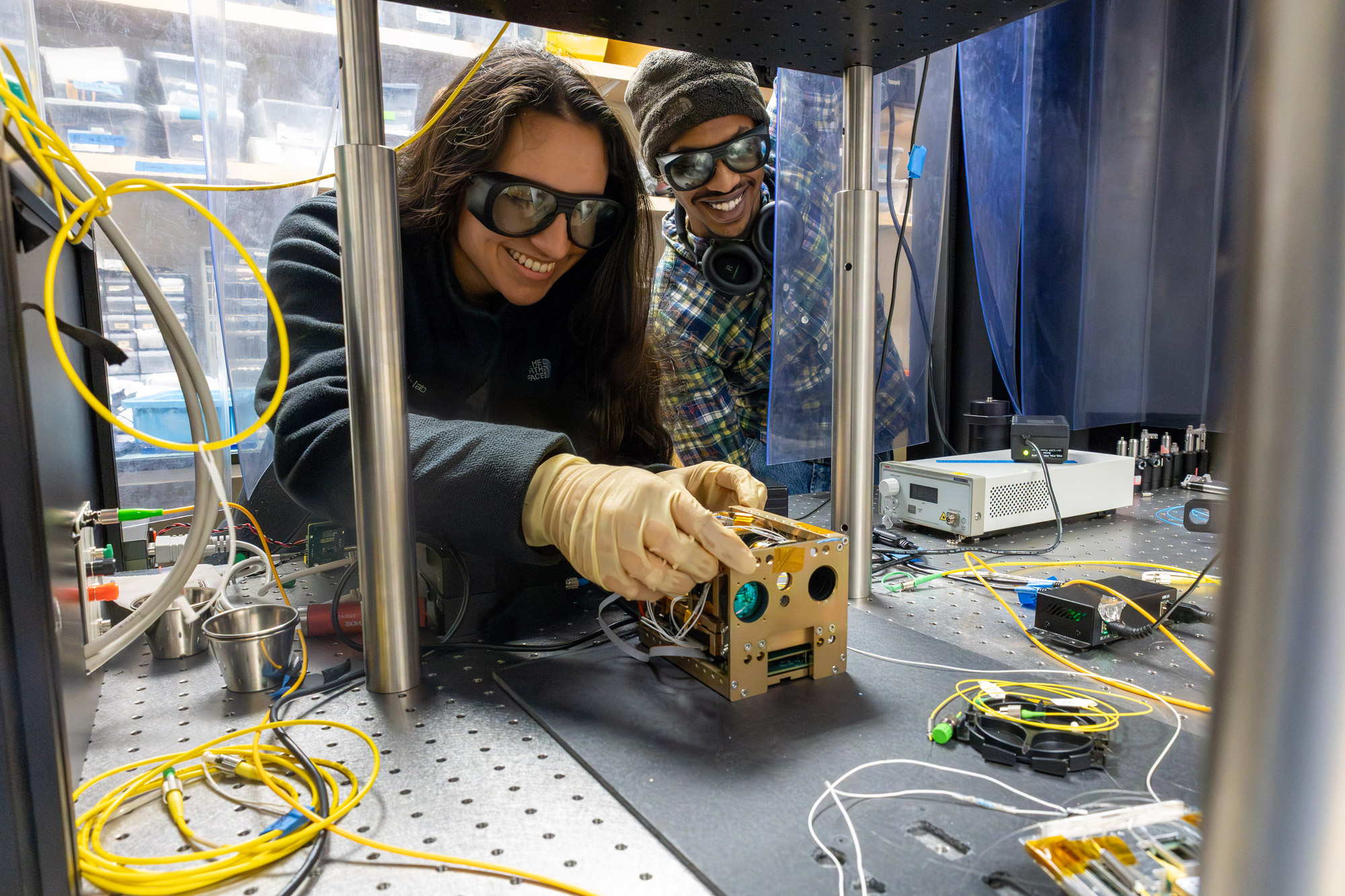
“The Small Satellite Collaborative facility is an investment in future leadership. As space becomes central to understanding Earth, connecting society, and expanding discovery, this facility will help define the next era of innovation.”
For decades, MIT has played a defining role in space—from the Apollo program to pioneering small spacecraft missions like TROPICS, TBIRD, and ASTERIA. Today, as small satellites reshape how we monitor Earth, communicate, and explore, the MIT Department of Aeronautics and Astronautics is building the Small Satellite Collaborative facility: a dedicated 5,700-square-foot environment for spacecraft design, integration, testing, and mission operations.
By bringing these capabilities together, the facility will enable a continuous engineering environment at MIT—where lessons from one mission will strengthen the next, new ideas will mature more quickly, and students will learn space engineering by doing. It will extend MIT’s legacy of advancing space research through ambitious missions and hands-on education.
The facility’s capabilities support many of MIT’s priorities. While rooted in aerospace, the Small Satellite Collaborative facility will advance work across climate and Earth observation, national security and communications, computing in orbit, and next-generation design and manufacturing. It will also strengthen MIT’s approach to education, where students learn by taking systems from concept to orbit.
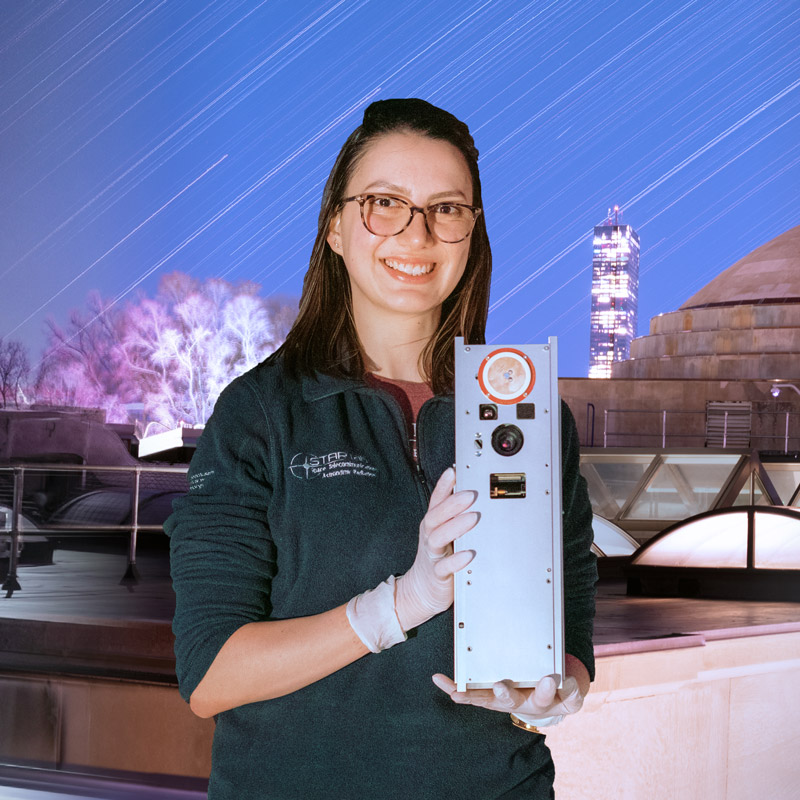
Small Satellite Collaborative Facility Brochure
More on MIT’s dedicated home for accelerating the maturation of space systems from concept through deployment.
View brochure →
View brochure →
Support the Small Satellite Collaborative Facility
More than $11M is already committed, including support from MIT Lincoln Laboratory. An additional $8M is needed to begin construction—planned for 2027—and to equip the facility with specialized capabilities, including a thermal vacuum chamber, solar simulator, Helmholtz coil, and advanced optical and electronics laboratories.
Your support will help build the foundation for the next generation of space systems.
To learn more about supporting this effort, contact Kate Reynolds, senior leadership giving officer, MIT Department of Aeronautics and Astronautics, [email protected] | 617.324.2771
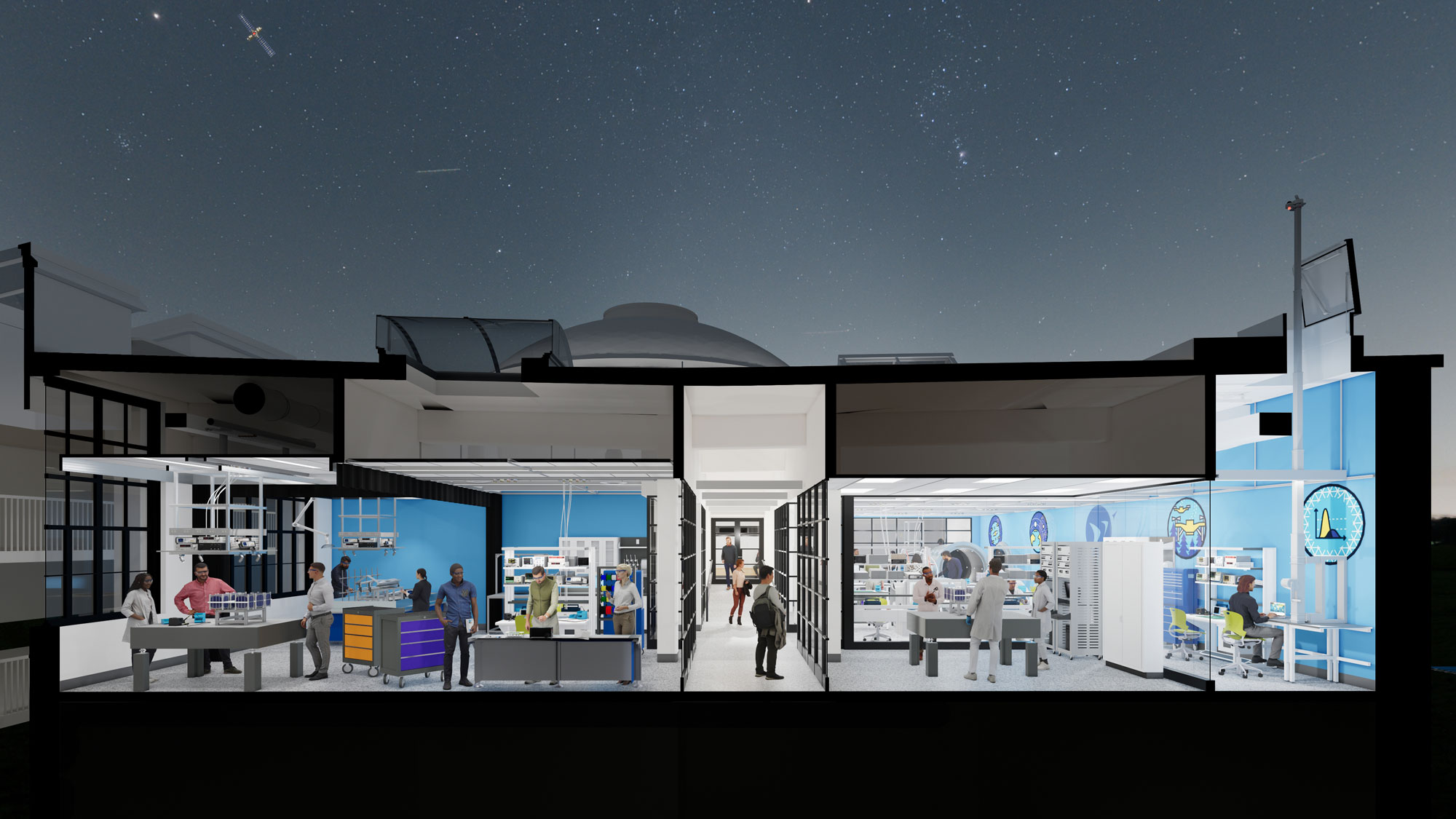
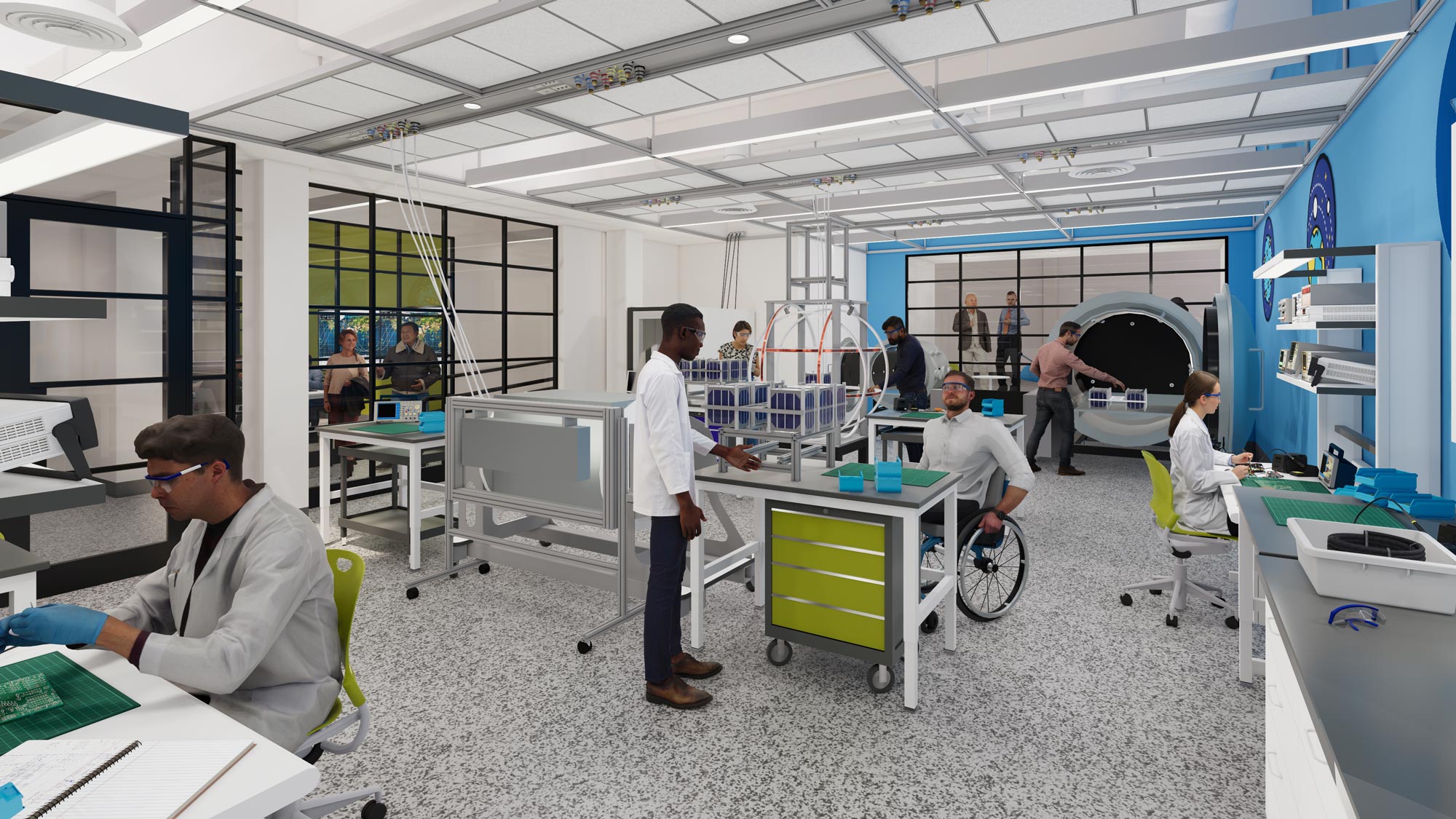
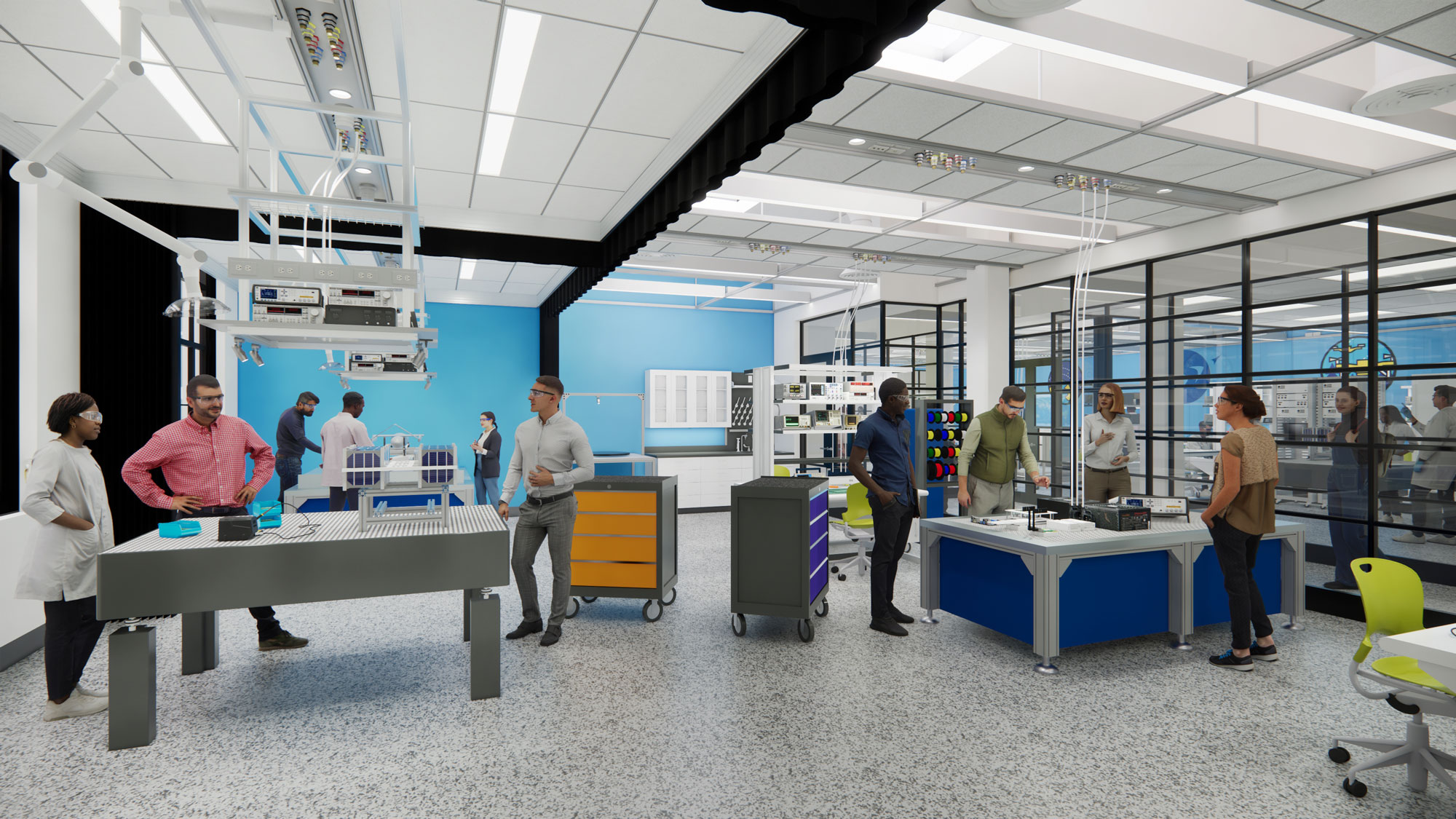
The Small Satellite Collaborative facility will be located on the 4th floor of Building 7 near the Great Dome.
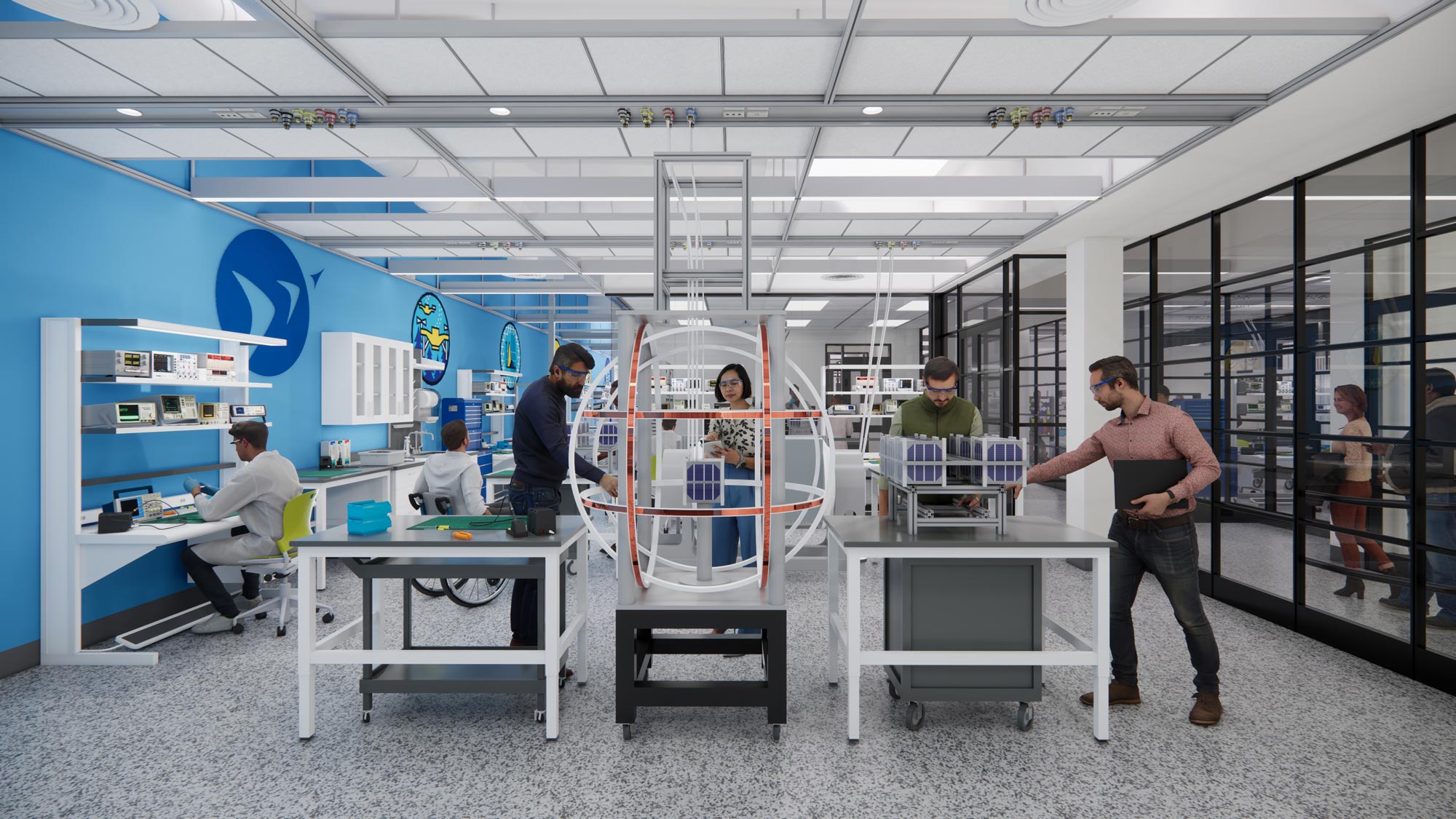
The Small Satellite Collaborative facility will feature an open layout designed to support a continuous workflow from concept to orbit, advancing innovation in small satellite design, integration, and testing.
The Components Testing Area will house a thermal vacuum chamber for flight-readiness testing, a bakeout oven for thermal outgassing and material characterization, a solar simulator to replicate the sun’s radiation and light spectrum, and a Helmholtz coil to generate uniform magnetic fields for testing sensors and attitude control systems.
The FlatSat Integration and Testing Area will provide dedicated space to integrate and validate small spacecraft components prior to clean-room assembly, with FlatSat integration tables, signal-generation equipment for subsystem testing, optical tables for laser system integration, and an air table for evaluating guidance, control, and maneuvering systems.
Learn More
- Prof. Kerri Cahoy talks low Earth orbit, satellites, and the future of space communications
- AEROS CubeSat launches to study ocean health
- CLICK-A: Optical communication experiments from a CubeSat downlink terminal
- Featured video: How tiny satellites help us track hurricanes and other weather events
- Tiny ASTERIA satellite achieves a first for CubeSats
- TBIRD technology could help image black holes’ photon rings
- BEAVR: Bimanual, multi-embodiment, accessible, virtual reality teleoperation system for robots