PHOTO: STEPHEN VOSS
Aneal says both experiences inspired him to make a significant gift supporting Undergraduate Research Opportunities (UROPs) for ROTC students at the MIT Institute for Soldier Nanotechnologies (ISN) and naming the dressing rooms in the new Edward and Joyce Linde Music Building on campus.
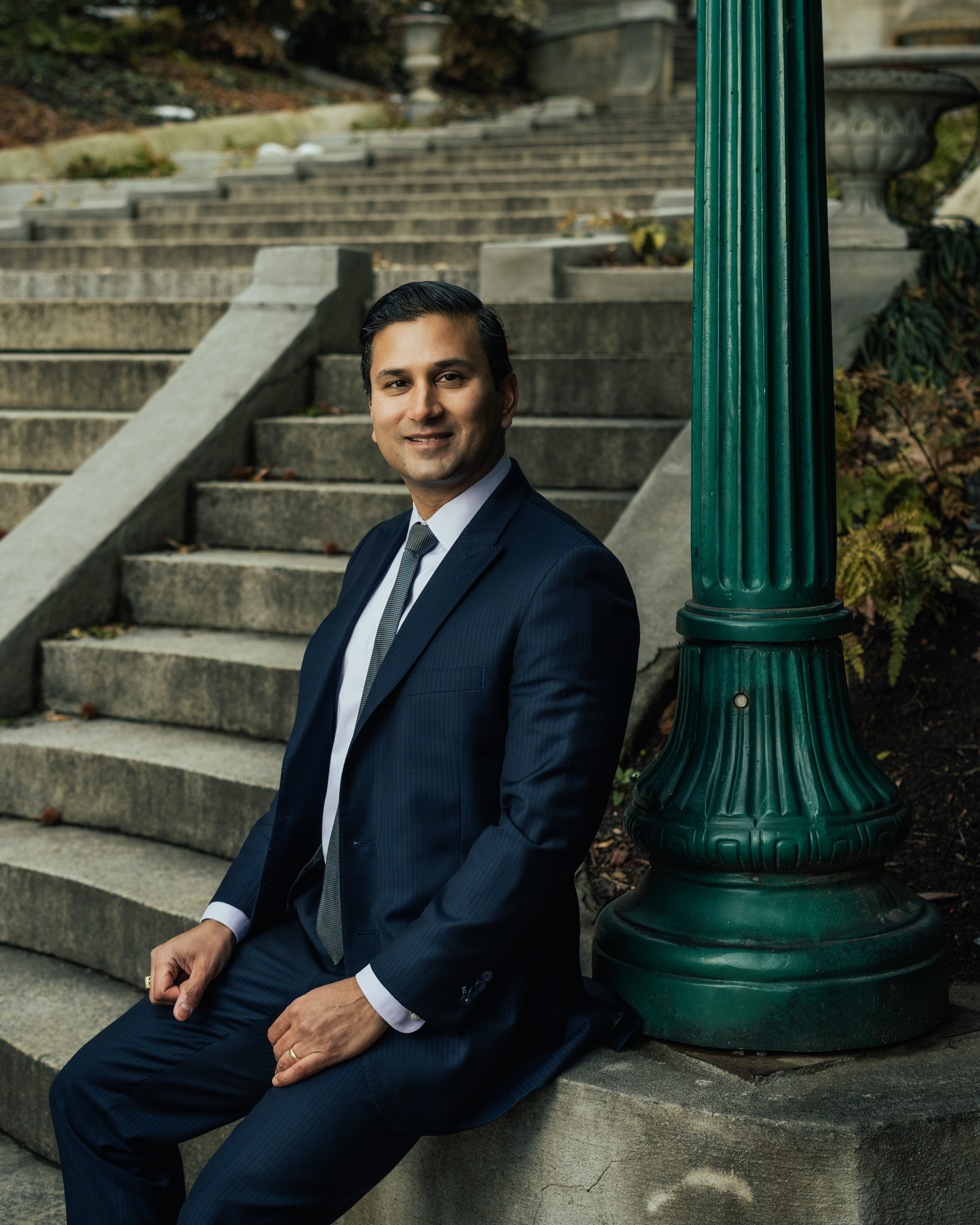
The son of immigrants from India, Aneal attended MIT on an Army ROTC scholarship, graduating with degrees in management (Course 15) and in electrical engineering and computer science (Course 6-2). He went on to be awarded the Bronze Star for his service as an infantry captain in Iraq, then built a successful career in the investment field.
Says Aneal: “MIT changed the arc of my entire life. Supporting MIT is one way I honor that impact.”
His career in finance has included roles at Veritas Capital and Goldman Sachs. Currently, he is founder and CEO of Prosper Northeastern Pennsylvania, a nonprofit organization that promotes economic growth in the region via targeted investment. He splits time between the Poconos Mountains and Washington, DC, with his wife, Svetlana, and their two young children.
Turning technology into battlefield advantage
In 2002, having served as cadet commander of MIT’s Army ROTC unit, Aneal was commissioned a second lieutenant in the US Army Infantry. Promoted to the rank of captain, he did a yearlong tour of duty in Basrah, Iraq, in 2007–2008, leading operations for a battalion of more than 600 soldiers and receiving the Bronze Star for meritorious service during combat. He served in the Army National Guard through 2010.
He said his MIT ROTC training prepared him well for his tour in Iraq by developing leadership under pressure, sophistication with technology, and an engineering mindset that enabled him to process large amounts of information while analyzing and solving complex problems.
“This was the first conflict where technology placed real-time satellite, drone, and sensor data in the hands of individual soldiers,” Aneal says. “My MIT education helped me quickly grasp the technology’s significance, apply it to mission outcomes, and teach others to do so as well.”
In 2022, when presented with an opportunity to advance both MIT’s ROTC program and the Institute’s research supporting America’s warfighters, Aneal says, “It was one of those moments that made sense right away.”
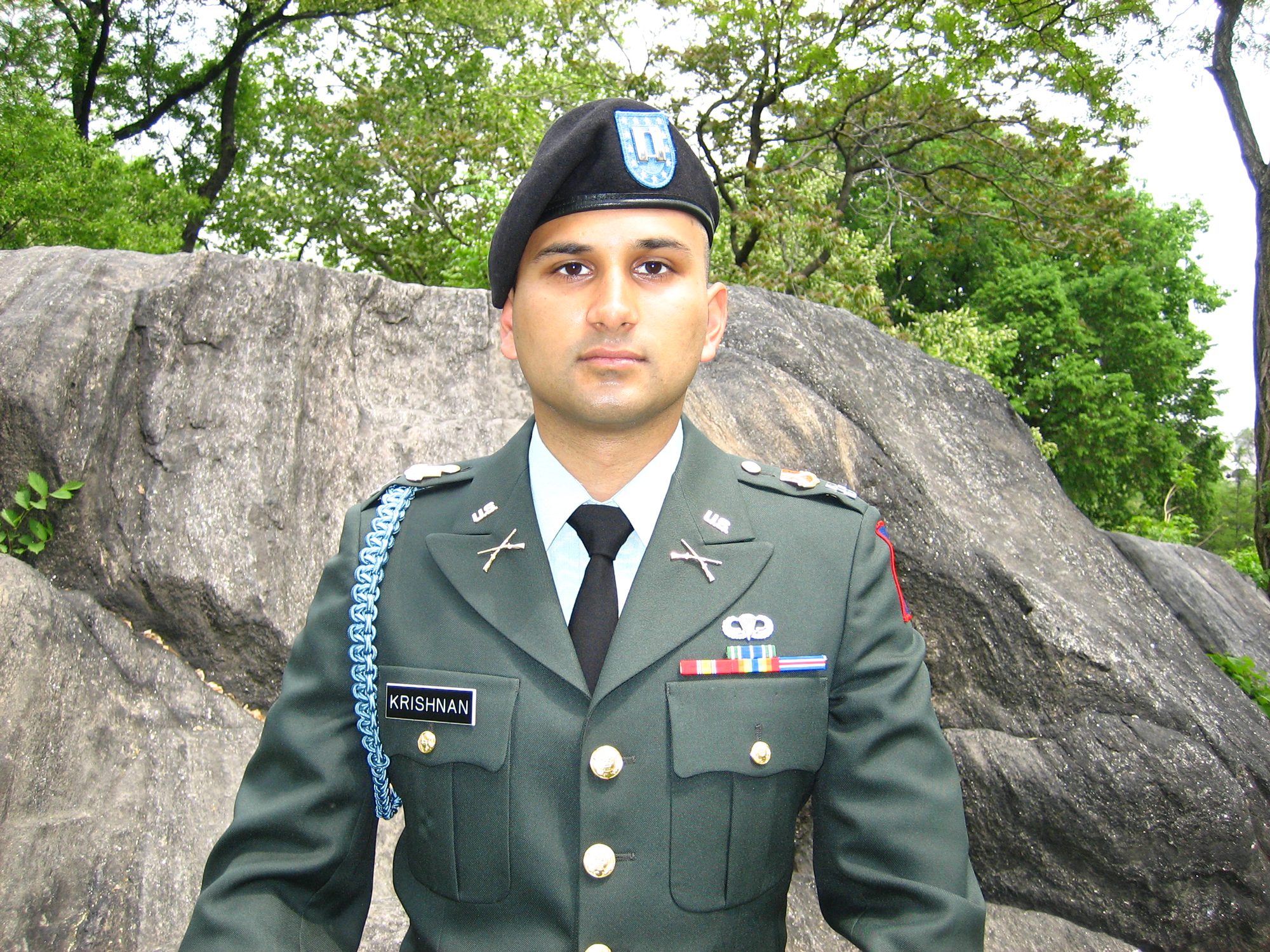
PHOTO: COURTESY OF ANEAL KRISHNAN
The Aneal Krishnan (2002) ISN Endowed Research Fund that he established provides support to MIT students pursuing UROPs at ISN labs, with a preference given to MIT ROTC cadets.
A joint endeavor between MIT and the US Army, the ISN pursues nanotechnology-based research to dramatically improve the protection, survivability, and operational capabilities of the US Armed Forces and then facilitates the transitioning of that research to the US Department of Defense and industry.
For example, MIT researchers affiliated with the ISN have developed a programmable computer in the form of an elastic fiber that can monitor health conditions and physical activity and alert the wearer to potential health risks in real time.
Additionally, an ISN principal investigator, Moungi Bawendi, the Lester Wolfe Professor of chemistry at MIT, was among three scientists to share the 2023 Nobel Prize in Chemistry for the discovery and development of quantum dots, which are used in military devices for a variety of purposes, including the detection of microwave radiation, and have become a mainstay of consumer electronics.
ISN research has led to more than 140 patents and more than 50 startups, according to Aneal.
As part of their ISN UROPs, the MIT ROTC cadets join Aneal on an annual mentorship trip to DC for a day of meetings with executives from institutions such as the Pentagon, intelligence agencies, investment banks, drone manufacturers, and software companies who seek to transition innovative national security technologies out of the lab and onto the front lines.
The UROPs integrate ROTC and MIT’s Department of Defense labs in a way that did not exist during Aneal’s time as an undergraduate, he says. Also, by connecting students to policymakers and practitioners, the UROP reinforces MIT’s ongoing engagement and relevance within the national security community.
“I’ve already had one group of cadets graduate, and they are doing great things,” he says. “Being able to mentor and stay in touch with outstanding Americans like that is extremely rewarding and personally meaningful to me.”
“Getting out there and rocking it”
Aneal says that music formed the other great part of his experience at MIT, where he performed with the Chorallaries, MIT’s first and oldest mixed-voice a cappella group.
Among the early contributors to the Edward and Joyce Linde Music Building, which opened its doors last year, he spoke admiringly of the new building’s exemplary acoustics and conservatory-grade performance spaces and practice rooms. “I wish it were there when I was a student,” says Aneal, who made the naming gift for the performance hall’s dressing rooms.
“I can remember all the times I would be waiting to go on stage, trying to calm those nerves, and then getting out there and rocking it,” he says. “I hope my name on the door has some sort of telepathic communication to the next student who’s down there trying to do the same thing.”