PHOTO: COURTESY OF JULIA CASEY
“It was just the culture of my area. Agriculture was a graduation requirement for me,” Casey says. “I could tell you in high school all about growing my tomato plants, and I knew how to characterize soil. That was the environment I grew up in.”
Since nearly everyone in her community earned a living from outdoor work or had a relative who did, they were fiercely protective of the environment, she says. But she noticed an exception to this conservationism in how people used, and disposed of, plastics.
She saw this problem most clearly in a field next to the Walmart where she worked part-time in high school. The field was designated as a parking area for Amish customers’ buggies, but when the horses weren’t there, people would toss waste in it. “It was by far and away the most littered spot in my entire town,” Casey says. When she had free time, she’d go pick up whatever she could.
Curiosity piqued by plastics
Some people might get annoyed by the litter, but Casey got curious. She wanted to know more about the generation and treatment of plastics, and how they affect communities like hers. When a teacher in her junior year assigned students an essay on a topic of their choosing, she decided to write about microplastics.
“I didn’t understand the terminology or even what a plastic technically was, but I had this phase where I was really interested in microplastics in high school,” she says.
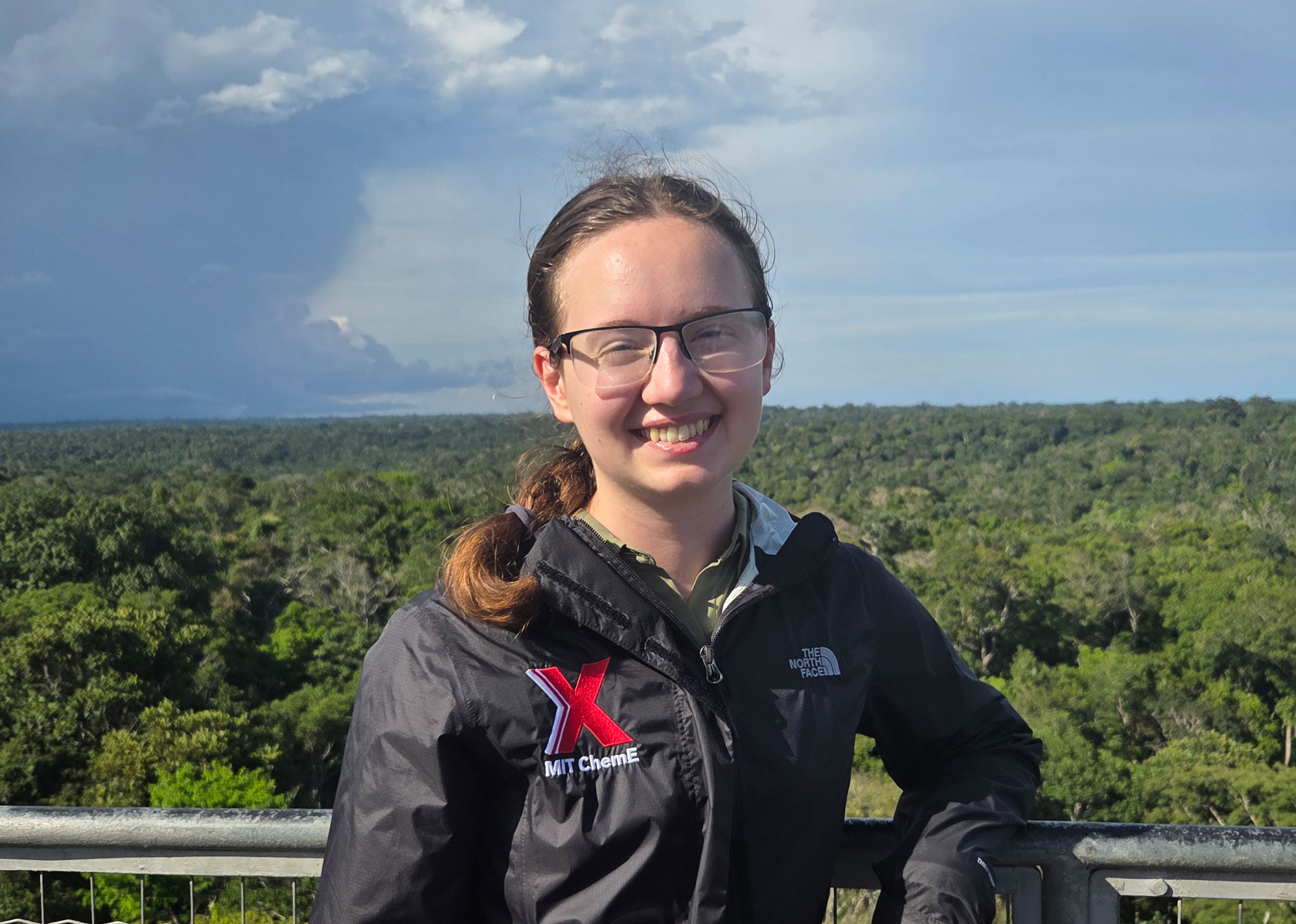
It’s an interest that’s stayed with her. Now in her senior year as a chemical engineering major at MIT, Casey knows very well what plastics are, and has been working for three years in the lab of Bradley Olsen, the Alexander and I. Michael Kasser (1960) Professor of chemical engineering, figuring out how to build better polymers: ones that are versatile enough to be used like traditional plastics but that are sustainable and, crucially, biodegradable.
Her work in the lab focuses on determining whether a bacterium or fungus degrades a polymer. “So, for example,” she explains, “will Paucimonas lemoignei, which is a species of bacteria commonly found in soil, degrade PET—polyethylene terephthalate—which is what your water bottles are commonly made of? The answer is no, but whenever we look into different kinds of polymers, different kinds of structures of materials, those relationships can get really interesting.” This year, she received funding to pursue the project as a Raj V. Tahil (1981) Research and Innovation Scholar through the Advanced Undergraduate Research Opportunities Program (SuperUROP).
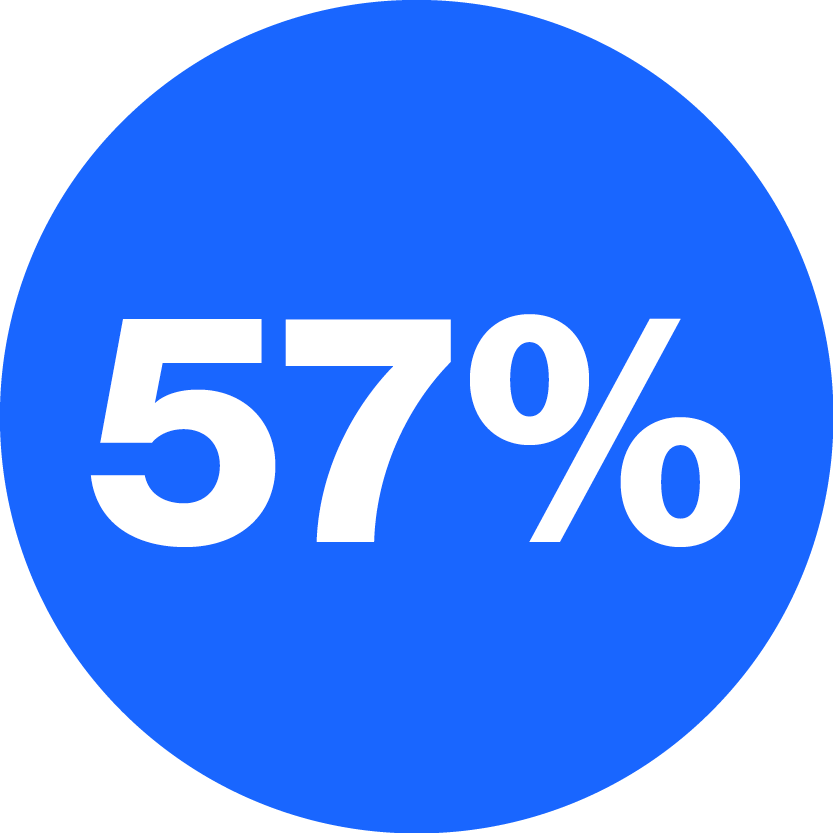
In academic year 2024–2025, 57% of undergraduates were awarded an MIT scholarship.
International research opportunity
In January 2026, during Independent Activities Period, Casey and about 20 other MIT students headed to Brazil for a hands-on experience creating a sustainable packaging material and seeing how it held up in real-world conditions. They were led by Olsen, who is also the faculty lead of MISTI-Brazil.
The MIT students, working with Brazilian graduate and undergraduate students, were tasked with developing packaging for an Amazonian company that produces farinha, a staple flour made from cassava root. The material had to be locally sourced and able to protect the flour during transport from a rural town to the state capital, Manaus. Adding to the task’s complexity, it had to be made in an area with limited access to electricity and a challenging transportation infrastructure.
“At one point, when we were visiting the community, they were trying to get a truck up a hill, but it was so muddy that I have this video of Professor Olsen literally trying to push this truck up the hill in a mudslide,” Casey says. “It’s that kind of environment.”
Over the three-week program, the group developed a packaging system consisting of a composite layer made of pulped leaves and fibers arranged in a crosshatch pattern to enhance tensile strength.
It’s this kind of problem-solving that Casey enjoys. Back on campus, she works on writing computer code that will help researchers better understand how hundreds of different polymers degrade over time. The goal is to learn more about the fundamental kinetics of the reactions. The lab can visually determine whether a polymer degrades and at what rate—but those rates have no true units, making it impossible to compare results across labs. Her code replicates the experimental results numerically, giving the degradation rates true units and helping to reveal the relationships governing how enzymes and polymers interact.
The road to MIT and beyond
Casey says she wouldn’t be at MIT if it weren’t for the scholarship she receives through the Linde Family Fund, established by the late Edward Linde ’62 and Joyce Linde, along with his family, to provide support for undergraduates at the Institute. The daughter of a preacher and a high school English teacher, Casey says money was tight at home. “I grew up on food stamps,” she says.
While researching colleges, Casey looked for a school where she could find students who came from similar circumstances. “MIT consistently stood out as accepting the most students from these backgrounds, and that really stood out to me as something where I can find a community there. I can find people like me, and I can build a sense of stability for myself.”
In fact, she’s found several communities, serving as co-president of Clubchem, the chemistry club; team captain for ChemE Cube, the chemical engineering competition team; and director of TechX, a technology and research club. She also runs alumni and first-year events for AIChE, the undergraduate chemical engineering club. In addition, she’s done numerous internships.
After graduation, she plans to work at Chartwell Consulting as a manufacturing consultant. Ultimately, she says, she wants to build a career as a problem solver: “I want to be the person at a company or at a group of companies that they go to whenever something goes wrong, and they need to figure out what happened—and how to design things so that it doesn’t happen again.”
SUPPORT SCHOLARSHIPS AT MIT
At MIT, breakthroughs begin with people—and undergraduates like Julia Casey are an integral part of that story. From their earliest semesters, they contribute to work that advances knowledge and shapes new technologies. You can help MIT meet the financial needs of brilliant undergraduates by supporting scholarships. When you give to MIT in this way, you ensure that every student who accepts an offer of admission has the resources and support to thrive. Make your gift.