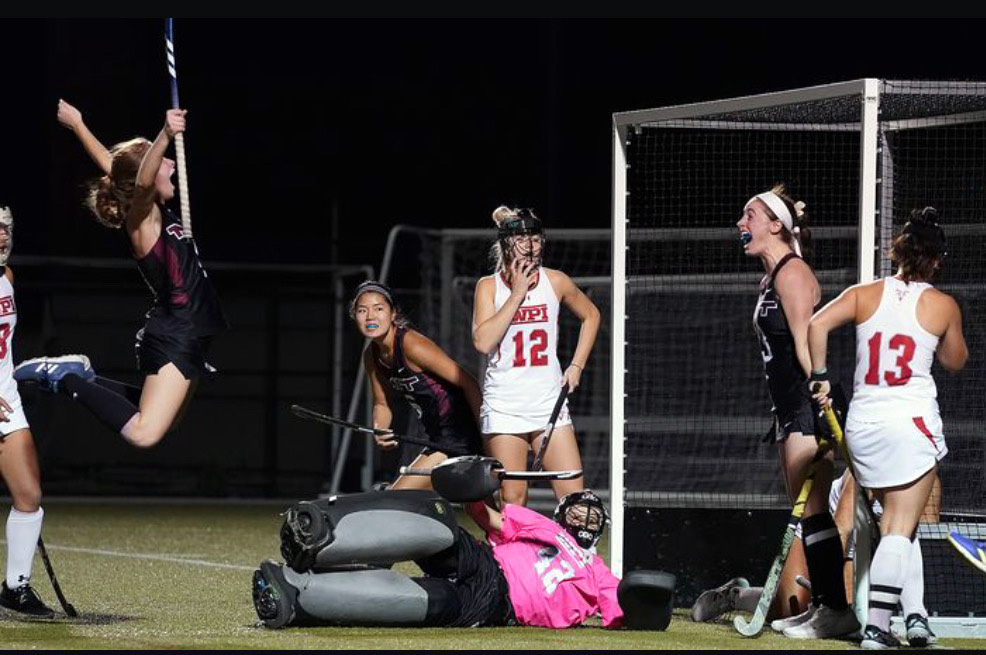
Bailey McIntyre leaps for joy as she celebrates with teammates after making a goal.
PHOTOS: COURTESY OF BAILEY MCINTYRE
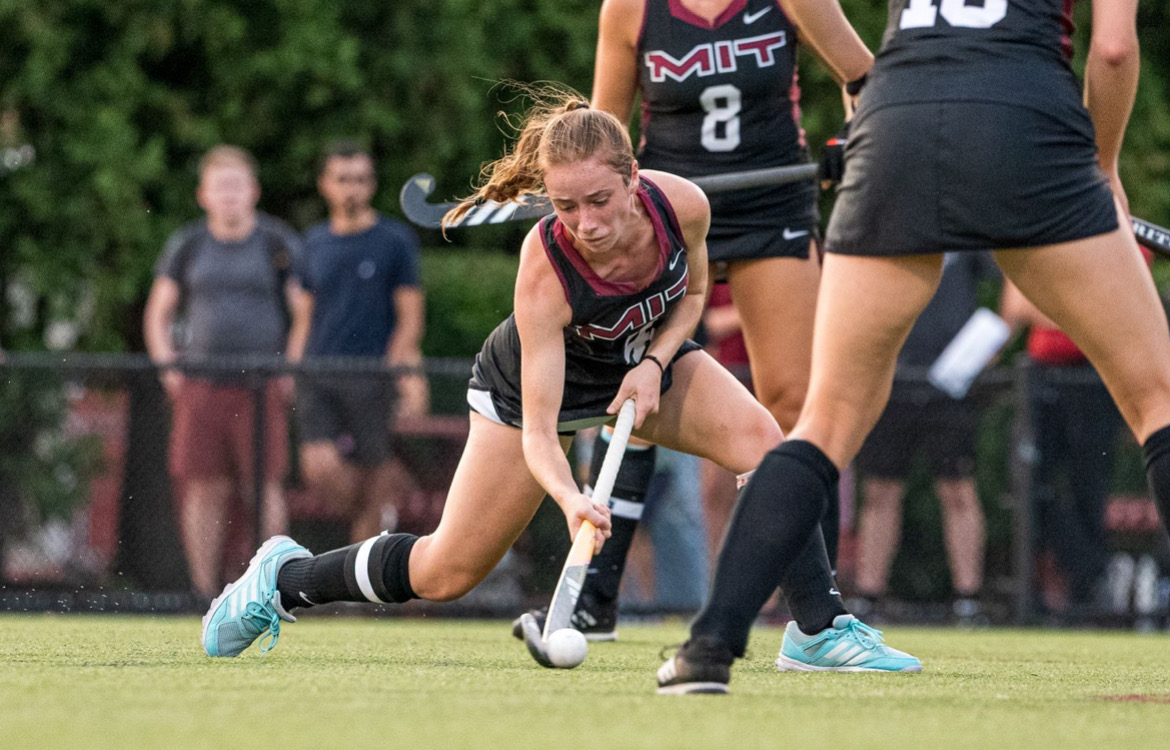
The MIT field hockey tri-captain graduated with 27 of them, the fifth most in the Institute’s field hockey record book.
“We just want the ball to go in the net,” she says. “When I get the ball at midfield, I feel as if the forwards on our team have worked so hard to get open and create really good scoring opportunities for themselves.
“To me, an assist is just as good as a goal,” she says.
She credits the Jim Donovan Scholarship, established by James “Jim” Donovan ’89, SM ’89, with a similar assist in setting her up for success. The scholarship supported McIntyre throughout her four years at MIT. McIntyre is one of four siblings in her Concord, Massachusetts, family—three of whom attended college simultaneously. (Identical twin sister, Quinn, just graduated from Bucknell.)
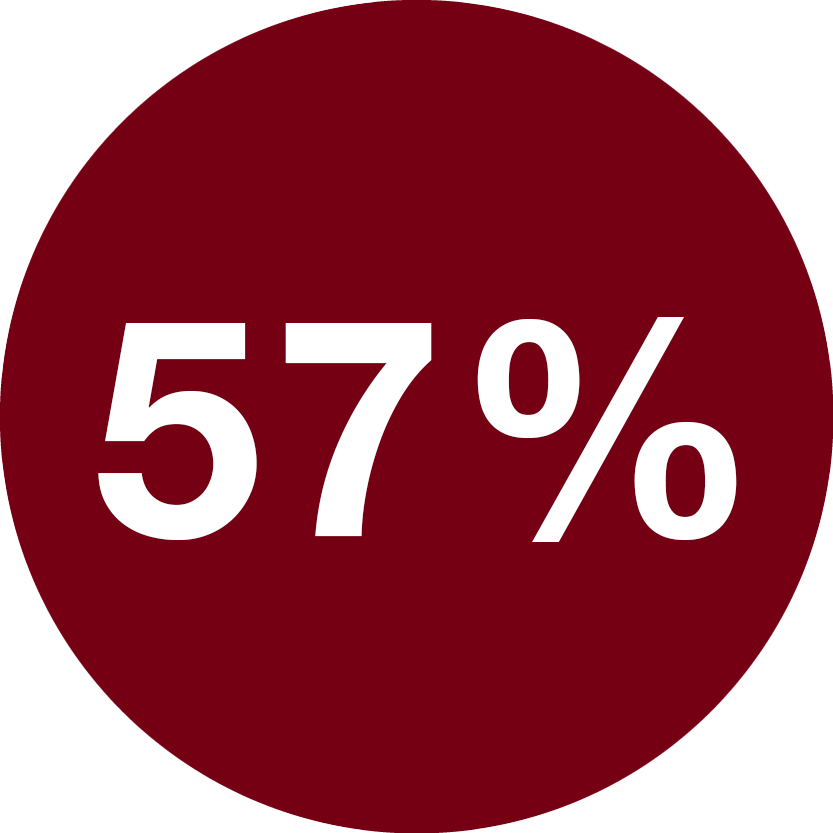
In academic year 2024–2025, 57% of undergraduates were awarded an MIT scholarship.
“Without that scholarship, my family wouldn’t have been able to afford my going to MIT,” she says. “MIT was my dream school and opened many opportunities for me. I was so grateful to have been able to experience it, especially being able to work in research labs and take really cool classes as a math and computer science major. The resources were incredible, and there was so much to do.”
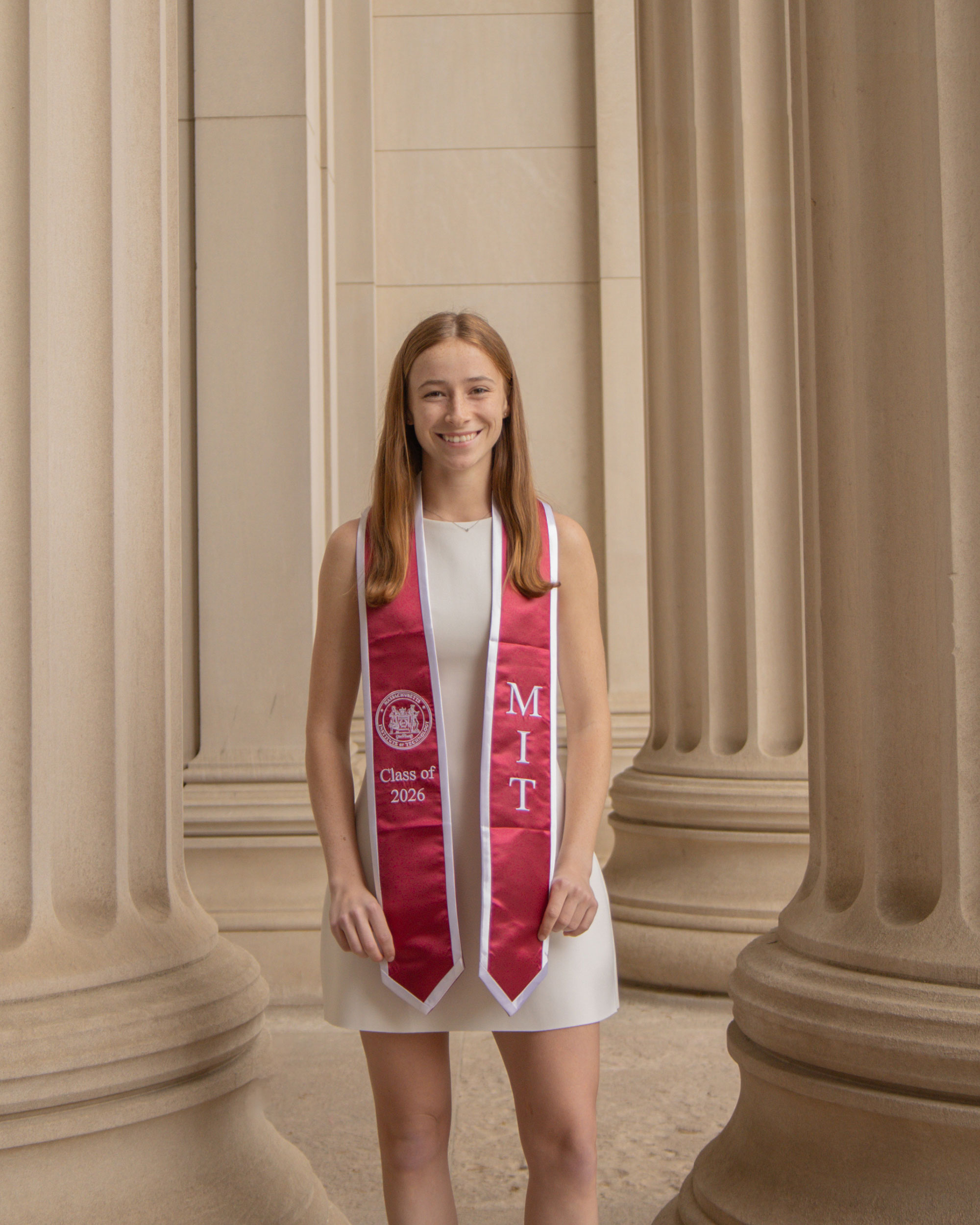
McIntyre began a full-time job in July 2026 as a sales and trading analyst at Barclays Investment Bank, where she worked as a summer intern in 2025, in New York City. She says MIT’s rigorous academics and research opportunities helped shape her path professionally, and highlights the social and mentoring networks she found through classmates, professors, and especially the field hockey team.
Teaching algebra by jump rope
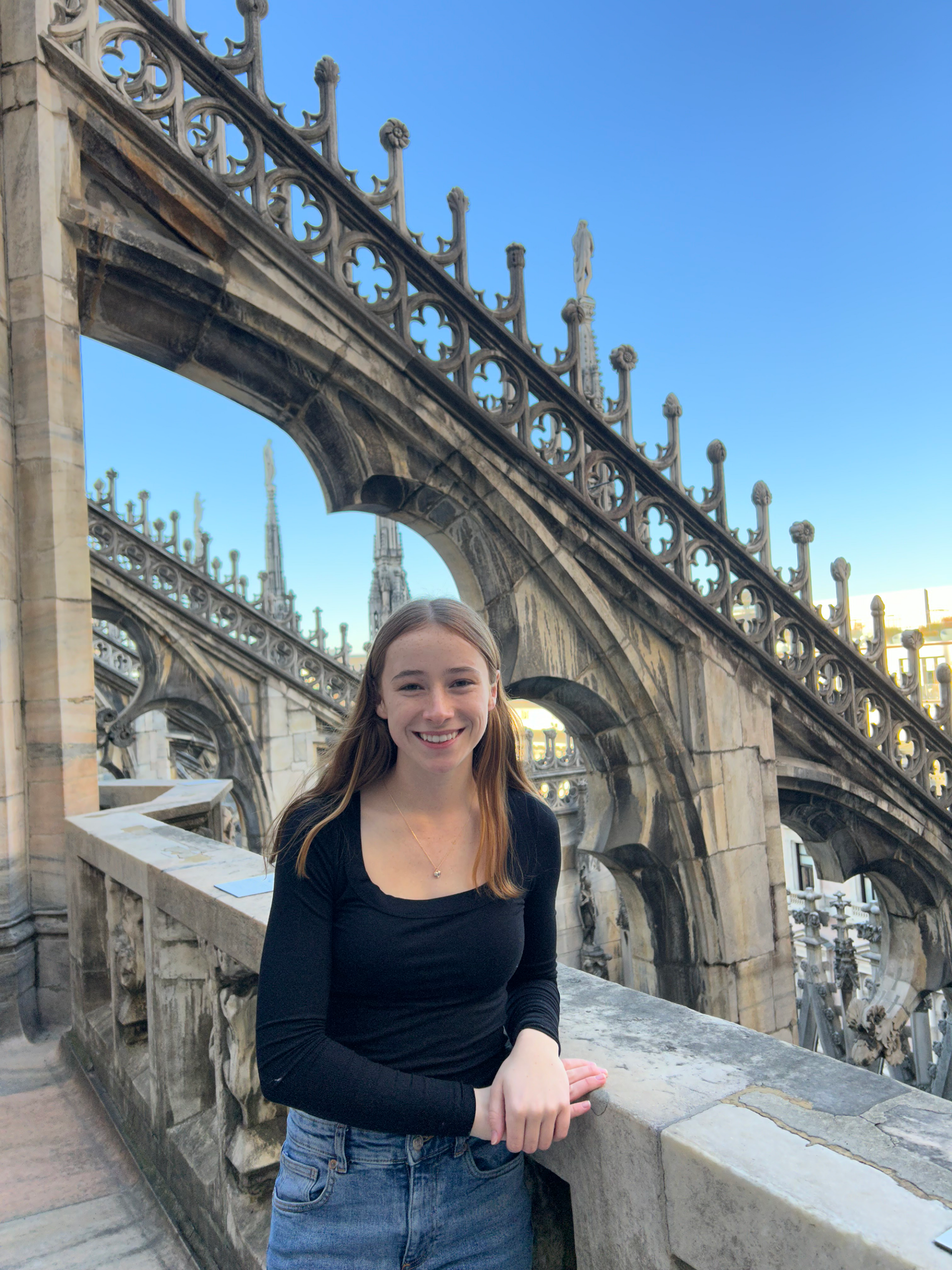
Asked about her favorite MIT memories, she describes staying with a host family while teaching in Italy as part of the MIT International Science and Technology Initiatives’ Global Teaching Labs program; playing in the National Collegiate Athletic Association tournament with the field hockey team; and “just working with my classmates late on projects.” In short: “Making friends and working hard, I guess.”

For her humanities and social sciences requirement, McIntyre took STS.014 Embodied Education: Past, Present, Future, in which students learned to teach math through movement. It was taught by Jennifer Light, the Bern Dibner Professor in the History of Science and Technology and a professor of urban studies and planning.
“That class was a really cool experience,” she says. “We thought of different algebra topics we could teach through games. The research behind learning through movement has shown solving difficult problems is easier to learn through activity.
“For my group’s project, we used a jump rope to teach the point slope form, the quickest way to write the equation of a line when you know the line’s slope and a single point on that line. We taught this by using the vertex in another point on the parabola to figure out the equation of the line.
“We would flip the jump rope at different speeds and heights. The goal was for [students] to discover that the top point of the jump rope was important for vertex form, a way to write a parabola’s equation so you can easily identify its turning point.
“Along with the jump rope game we had a tag game, and we got to present on those projects on the last day of class to a group of Cambridge teachers. They were able to give their expertise and explain to us what elements they think would work well in a classroom, which was helpful feedback for us.”
“At MIT, I met my best friends”
The Jim Donovan Scholarship made these experiences and others possible, McIntyre says.
“I’m so grateful for the scholarship fund, which has had such an impact on my education,” she says. “At MIT, I met my best friends and had the opportunity to learn from peers who are talented, driven, and motivated, and have introduced me to different types of thinking.
“The community has been so welcoming, so creative, so kind, and just so inspiring to me, it’s allowed me to achieve things in my academic journey I would’ve never thought possible.”
Her field hockey stick, scuffed and dinged after being used in every game the past two seasons, is a keepsake of her time at MIT, and a reminder of her team.
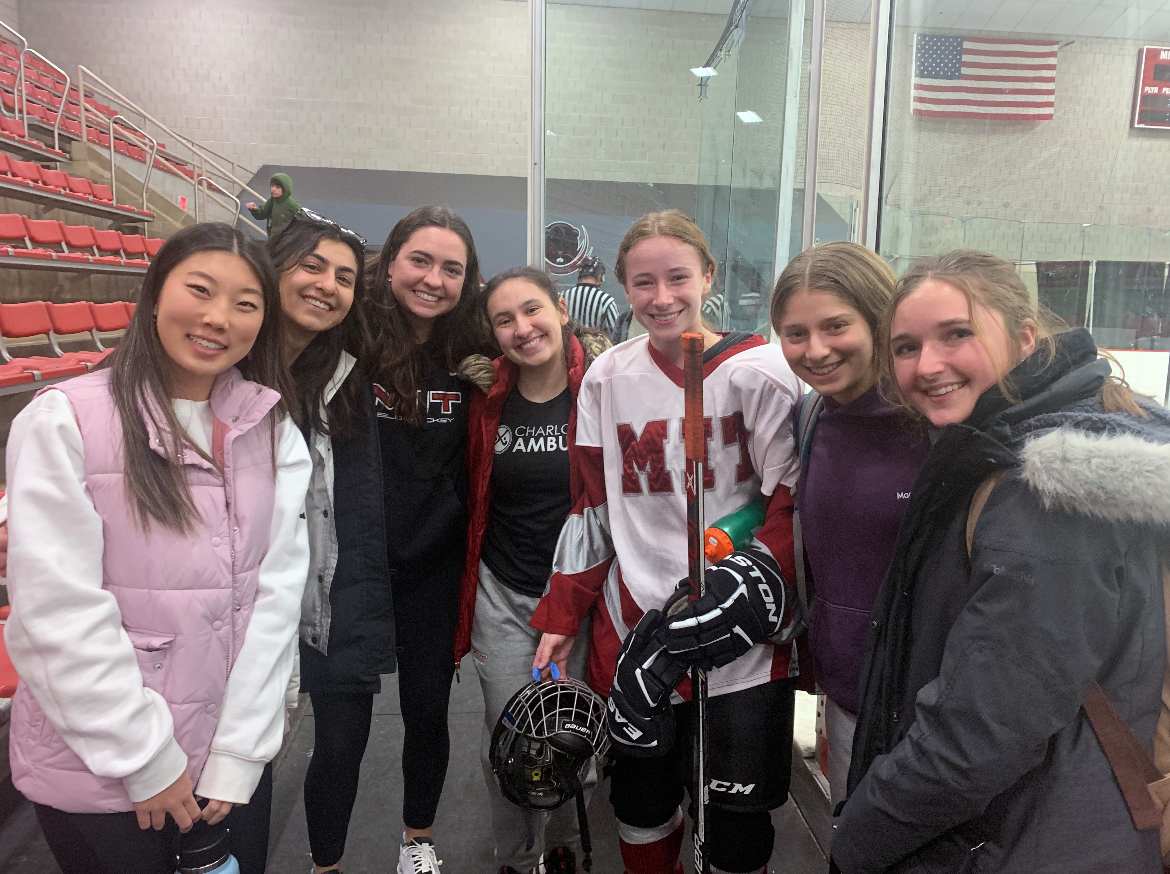
“I spent so much time with my teammates, and they provided me so much academic and job-searching help,” she says. “My teammates are the best.
“MIT was always my dream school. It turned out to be even better than I imagined it could be.”
SUPPORT SCHOLARSHIPS AT MIT
At MIT, impact begins with people—and recent graduates like Bailey McIntyre are an integral part of that story. MIT graduates go on to make a difference in every field, applying the Institute’s hands-on approach to solving problems that matter. By supporting scholarships, you help ensure that every student who accepts an offer of admission has the resources and support to thrive at MIT and contribute their talents wherever they can have the greatest impact. Make your scholarship gift.