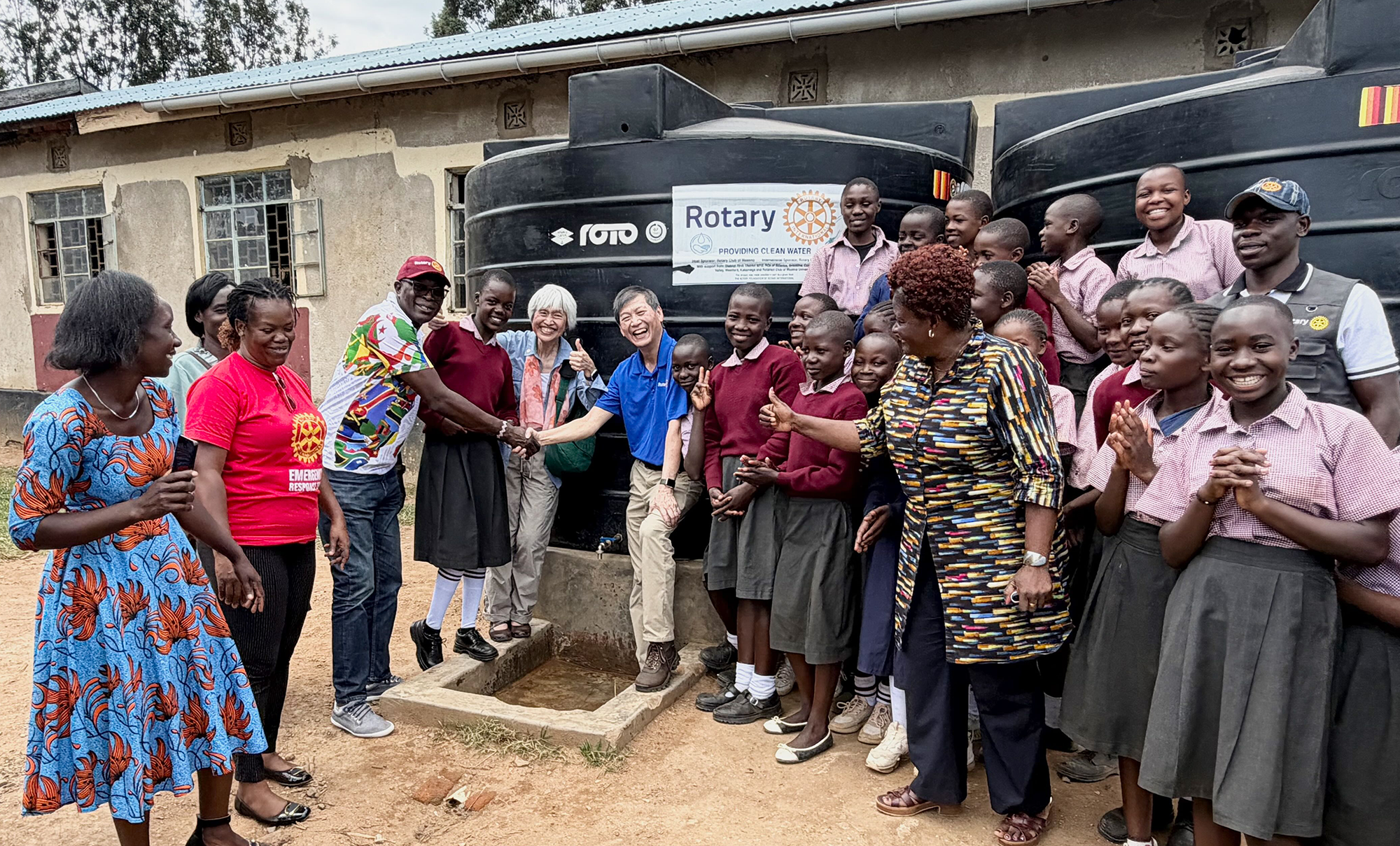
In Kenya, Victor Tom and Sze-Wen Kuo's Rotary Club of Bedford supports a rainwater catchment program to provide clean water to schools in the villages of Kambiri.
PHOTO: COURTESY OF VICTOR TOM
Victor Tom ’72, SM ’73, SCD ’81 and wife, Sze-Wen Kuo ’73, are proud MIT alumni and dedicated Rotarians, and see a wonderful commonality between the two missions.
“To ‘mind and hand’ we like to add ‘heart,’” says Kuo. “The model for both MIT and Rotary is service. And there is so much out there you can do to help.”
The Bedford, Massachusetts, couple have set out to act as a bridge between the Institute and the international service organization. Both past presidents of the Rotary Club of Bedford, Tom and Kuo have built an international network of Rotary Clubs, most with MIT alumni members, that share an interest in supporting MIT student-led innovative, sustainable solutions that improve lives and strengthen communities around the world.
The couple have eclectic interests and talents. She is a retired software engineer whose work contributed to the Apollo space program and the International Space Station. He worked at a number of MIT startups and retired last year from a position as a chief scientist at BAE Systems’ FAST Labs, where he specialized in computer vision technology for the defense industry.
In nondefense work, Tom’s efforts in camera-mapping technology helped America3 win the America’s Cup in 1992, and he developed the first practical pitch-tracking system for Major League Baseball, a system that revolutionized the way umpires call balls and strikes. He has given his presentation, “How Rocket Science Made Its Way into Major League Baseball and the Strike Zone,” at Rotary Clubs around the country as well as at the National Baseball Hall of Fame in Cooperstown, New York.
Committed to volunteer service
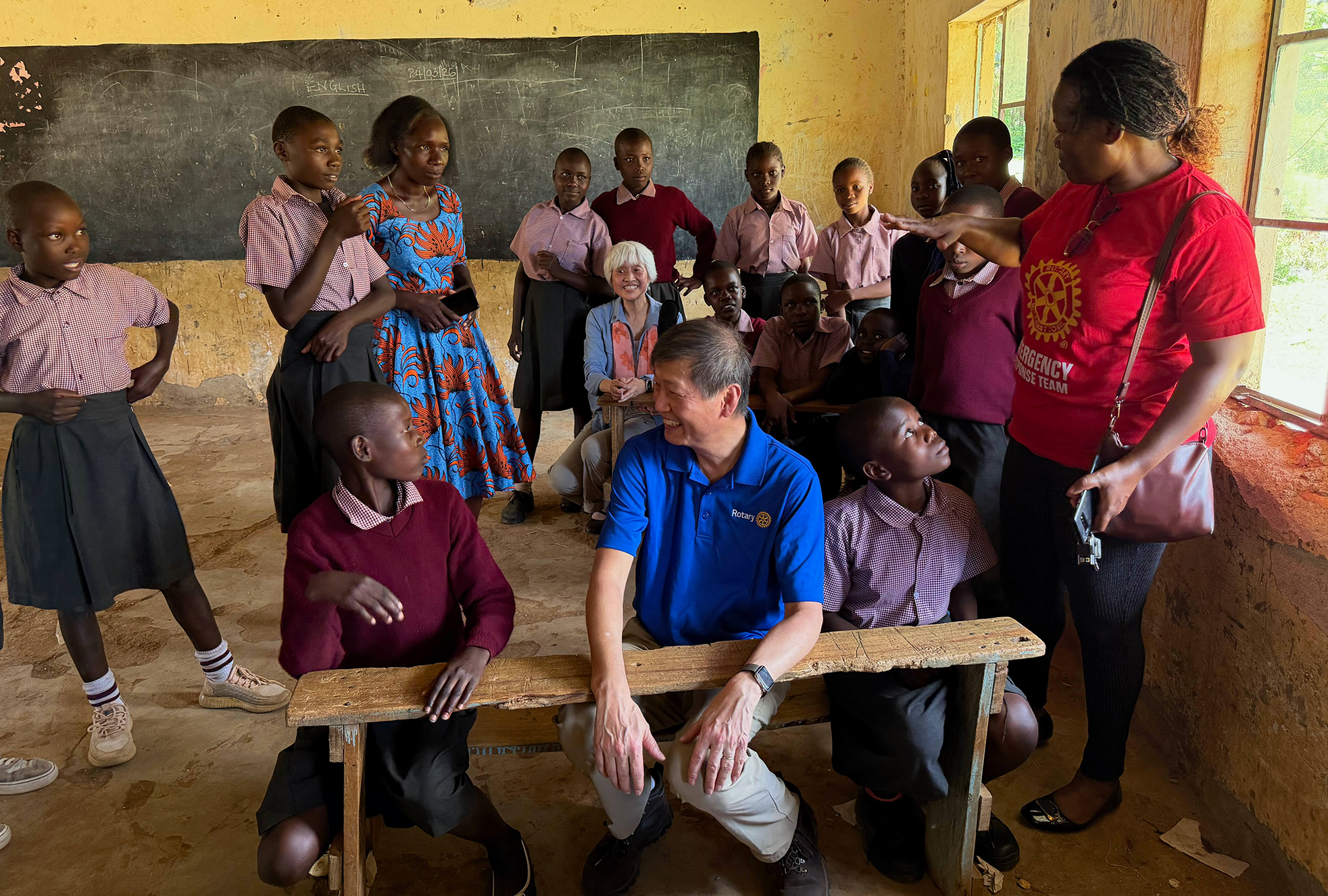
In MIT and Rotary, the couple’s passions converge. They regularly travel on Rotary service missions, including a trip this past April to Kenya, where their Bedford club supports a rainwater catchment project to provide clean water to schools in the villages of Kambiri.
At MIT, Kuo is currently president of the Cardinal & Gray Society, composed of nearly 23,000 MIT alumni who have marked the 50th anniversary of their graduation, distinguished by the traditional cardinal blazer. She is a past president of the Association of MIT Alumnae, past president of the Class of 1973, and a former member of the MIT Alumni Association Board of Directors. She is a recipient of the Bronze Beaver Award, the MITAA’s highest honor for an alumni volunteer.
Tom has been a dedicated volunteer for MIT for decades, serving as a class agent for the Class of 1972, a longtime member of both the Reunion Planning Committee and Reunion Gift Committee, and an educational counselor for more than 40 years. He as also mentored MIT students and served as advisor to the MIT Rotaract Club, a student-run service club affiliated with Rotary International. He is a recipient of the MITAA’s Harold E. Lobdell ’17 Distinguished Service Award.
“We think everyone can volunteer,” says Kuo. “We believe in MIT’s mission to build a better world. We all need that.”
Advancing the Priscilla King Gray Center for Social Impact
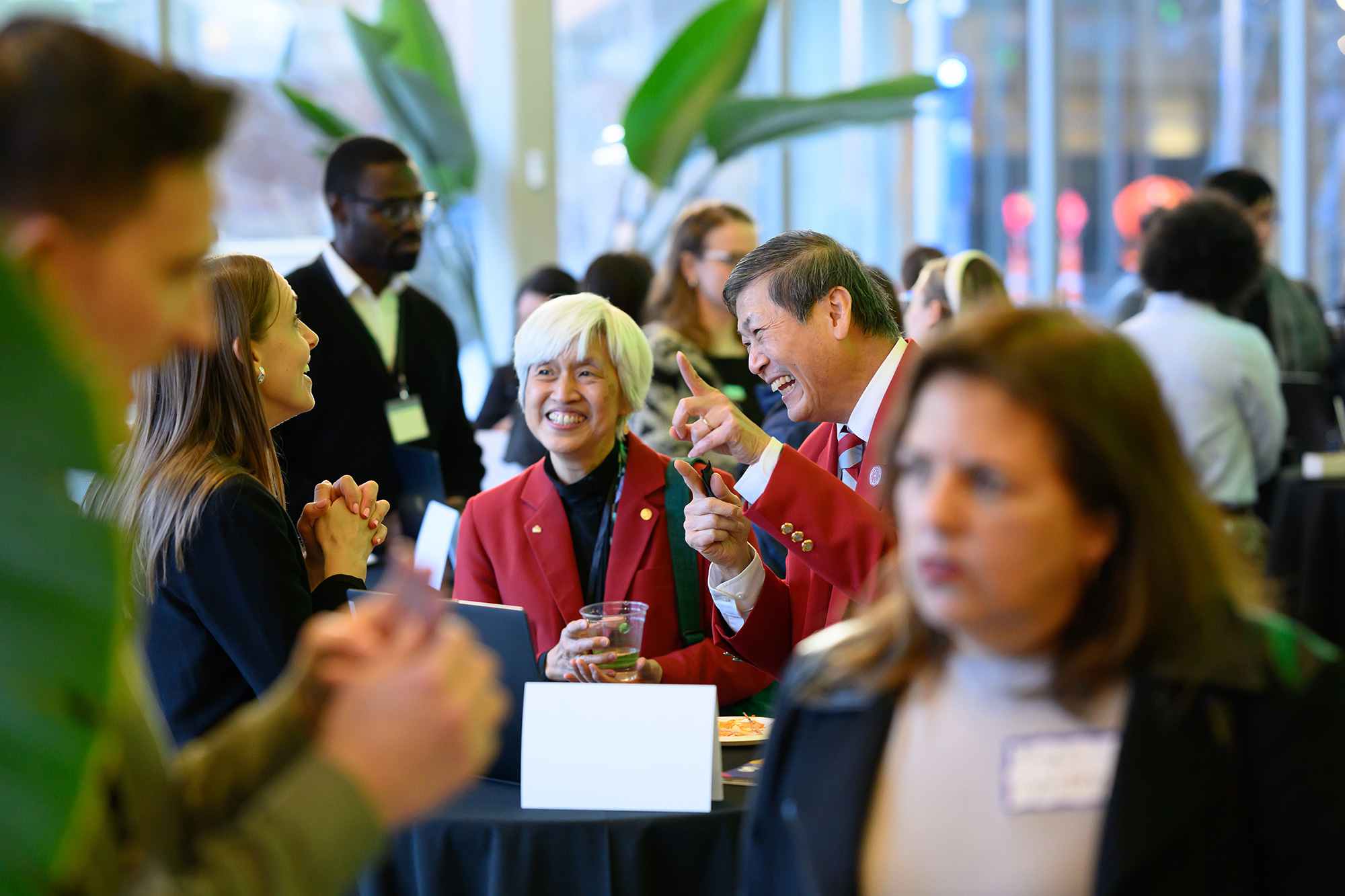
Tom and Kuo are among the founding members of the Friends of the MIT Priscilla King Gray (PKG) Center for Social Impact, and contribute to the PKG financially and through volunteerism. The PKG provides experiential-learning opportunities through internships, fellowships, and social entrepreneurship, with the stated mission of empowering students to become agents of change for the betterment of humankind.
The couple established the Sze-Wen Kuo and Victor Tom PKG Center Fund at MIT to support the center’s IDEAS Social Innovation Challenge, a training program for aspiring social entrepreneurs that funds and incubates social impact ventures in more than 60 countries.
As champions of the PKG and MIT in Rotary circles, Tom and Kuo have done more than help secure Rotary Global Grants for IDEAS startups. They have leveraged Rotary’s extensive network to raise the profile of these ventures, build awareness with new audiences at club and district events, and expand the startups’ reach and impact.
“We look for opportunities to partner Rotary with these projects, and to connect them with local clubs in foreign countries,” says Tom. “Sometimes we can provide them with support just by helping them connect with community leaders and navigate local government bureaucracies.”
Tom is a past governor of Rotary District 7910, known as the Minuteman District, which represents more than 1,100 Rotarians across more than 50 clubs in Central and MetroWest Massachusetts. Kuo is a past chair of the Bedford Rotary Foundation.
Rotary International is a global service organization with 1.2 million members in more than 45,000 clubs worldwide. Through its network of local clubs and global grants, Rotary works to improve health, reduce poverty, expand access to education, and promote world understanding, goodwill, and peace.
Rotary global grants support humanitarian projects with sustainable, measurable outcomes in Rotary’s areas of focus: promoting peace, improving maternal and child health, fighting disease, supporting education, protecting the environment, providing clean water, and growing local economies. The grants range between $30,000 and $400,000.
As a result of outreach by Tom and Kuo, Rotary clubs around the world are currently providing support to three social ventures that emerged from the PKG IDEAS Social Innovation Challenge. Moving Health, a motorized tricycle ambulance project in Ghana; Encora Therapeutics, which has developed a wrist-worn device that reduces hand tremors in patients with Parkinson’s disease; and Lyme Alert, a home testing kit for detecting Lyme disease in ticks.
A new Rotary scholarship in Data, Economics, and Design of Policy
Additionally, Tom and Kuo have established a Rotary-endowed fund to support fellowships for students in the Data, Economics, and Design of Policy (DEDP) MicroMasters and master’s programs at MIT.
The fund will support learners who complete the DEDP MicroMasters program and are admitted to the master’s program but would be unable to attend MIT without financial assistance, according to the Abdul Latif Jameel Poverty Action Lab, which coadministers the DEDP master’s program with the Department of Economics.
“MIT recognizes us as the connection with Rotary, and Rotary recognizes us as the connection with MIT,” says Tom. “Whenever they have a question about MIT, such as about this new DEDP program, they come to us. We gathered up a bunch of district leaders and brought them to MIT, and we were all just wowed by this program.”
Tom and Kuo worked closely with Rotary International to navigate the global grants process and develop a sustainable model of international support. Rotary District 7910 will administer the annual global grant scholarship. The inaugural Tom and Kuo MIT Scholar, Ho-Din Ligay of Seoul, South Korea, begins his studies in January 2027.
“This model of partnership reflects Rotary’s mission to foster economic development and cultivate ethical, globally minded leaders,” says Tom. “We hope this fund encourages other clubs and districts to create similar opportunities for future DEDP students.”
Building a network of MIT alumni Rotarians
Tom has taken the initiative to connect with MIT alumni who are involved with Rotary. He has identified 28 so far. “That’s how the network expands,” he says. “When I give my baseball talks, I always say at the beginning, ‘I’m always on the lookout for MIT alumni.’”
The MIT alumni Rotarians’ network he has built includes members of clubs in Bedford and Cambridge, Massachusetts; Beverly Hills, California; Cooperstown, New York; and Shanghai, China, among others. “I know there are more Rotarians who are MIT alumni,” says Tom. He invites others who share an interest in supporting service projects around the world to contact him at [email protected] to be added to his network.
What has kept Tom and Kuo so involved with MIT over five decades?
“I just am so grateful to MIT for providing me the wherewithal to have a great career,” says Tom. “I’ve always wanted to give back to MIT.”
Says Kuo: “The spark was always there. We’re seeing all these people coming out with great ideas, and all the possibilities. It’s MIT—it’s curiosity. We want to know, ‘What is that about?’ And we say, ‘How can we help?’”